
How to Cut and Move Shortbread Without Breaking It
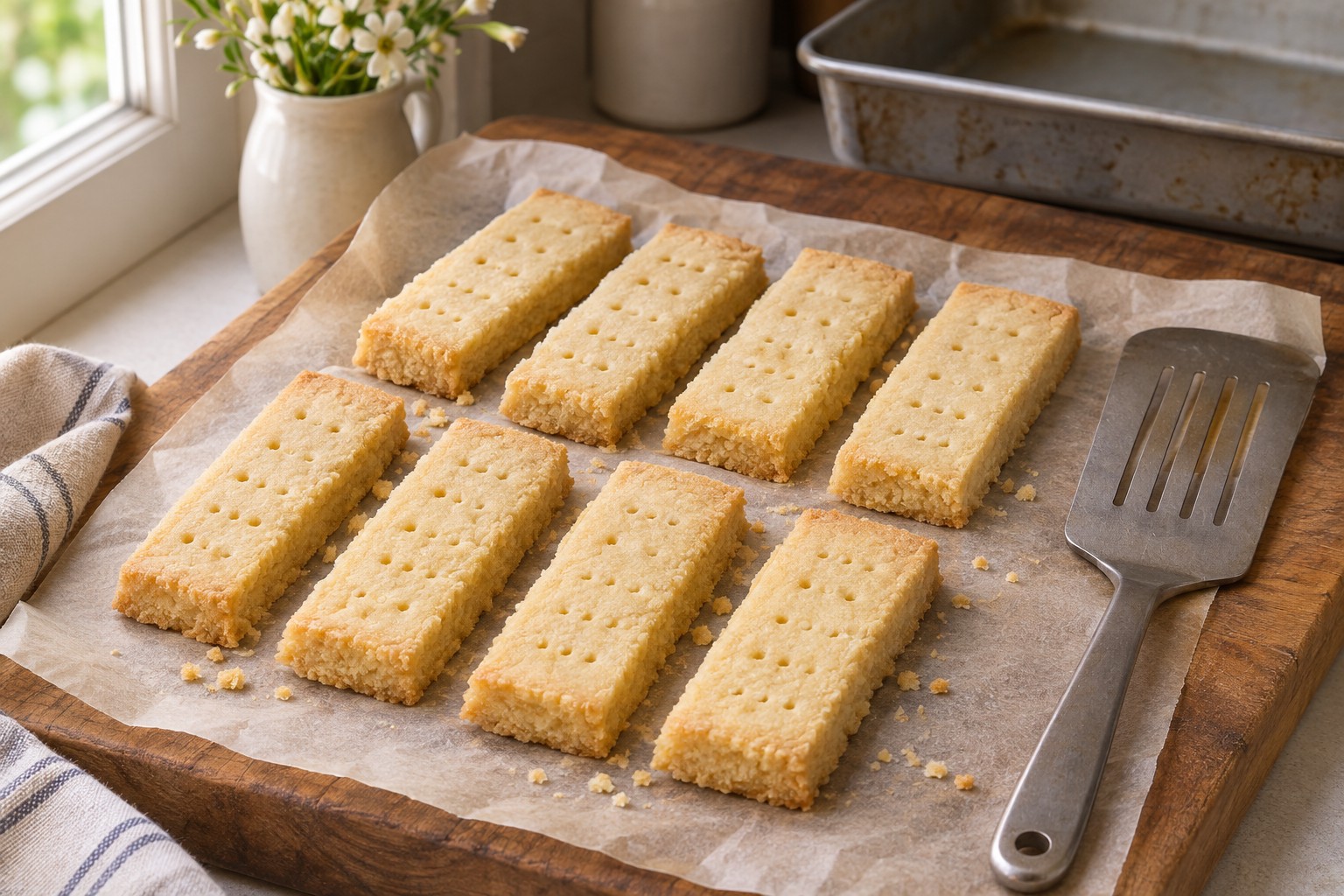
A shortbread finger can survive the knife and still break on the way to the cooling rack. Cutting a slab into portions and lifting those portions ask different things of the bake: a warm slab may cut more easily, while individual pieces need enough firmness and support to move.
For the pressed shortbread discussed here, the useful sequence is score before baking, cut while warm, and cool before separating. Follow your particular recipe if it specifies a different unmoulding method, especially for a decorative shortbread pan.
Prepare the cutting lines before baking
Score the shaped dough where you want the finished pieces to separate. These shallow guides give the knife a route to follow later; they are not a substitute for cutting through the baked slab.
Keep the portions reasonably even and press the dough to a consistent thickness, including the corners. A thin strip along one edge is harder to handle than the thicker pieces beside it. Avoid making especially narrow fingers simply to squeeze another serving out of the pan.
Scoring and docking have different purposes. Scoring marks portions; docking makes the small fork holes specified by some recipes. Make both according to the recipe rather than repeatedly piercing the intended cutting lines.
If you are starting with the site’s Vanilla Shortbread Fingers: A Press-in-Pan Recipe, keep its pan size, thickness, and portion layout together. This guide expands the handling steps rather than changing that formula.
Cut while warm, without trying to lift the pieces
Give the baked slab its recipe-directed rest before cutting. You want it warm enough to cut without excessive resistance, but sufficiently settled that the blade does not push the surface into a soft ridge.
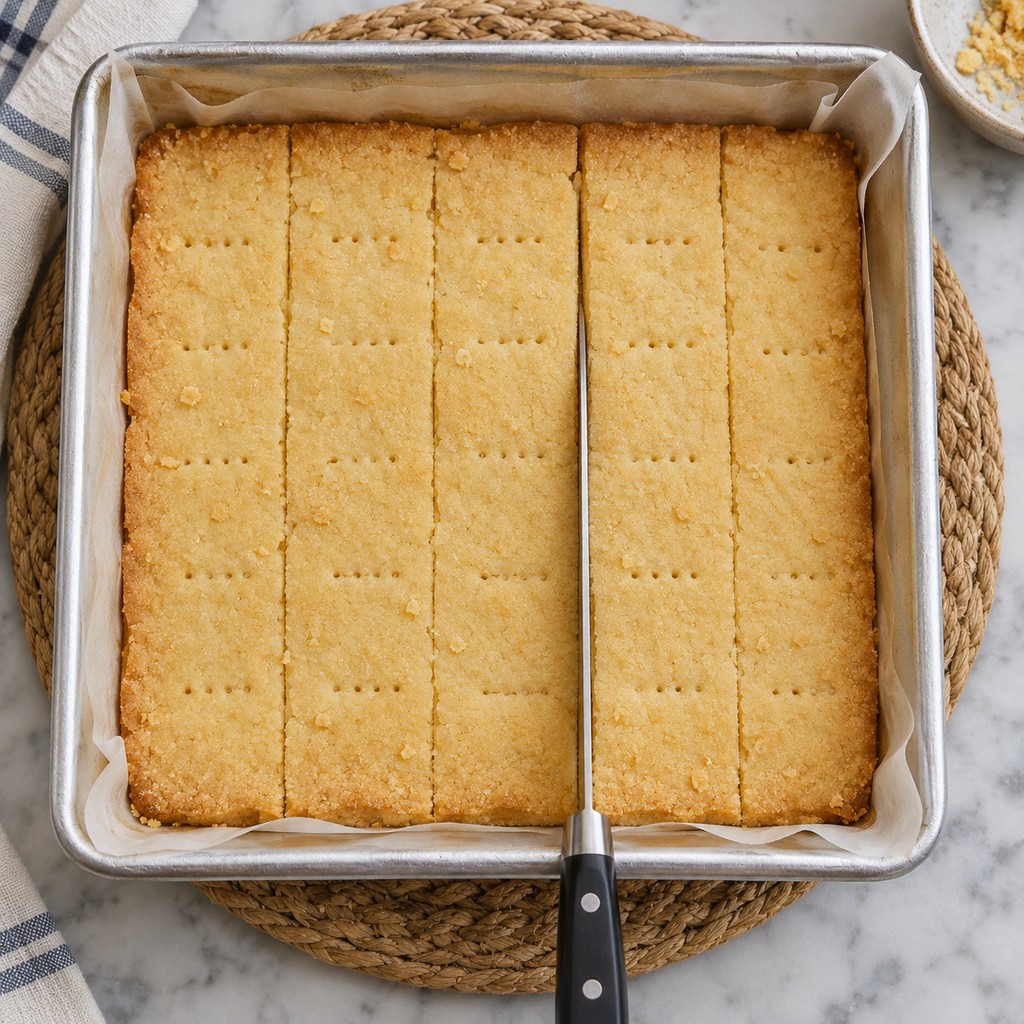
Warm cutting is an established approach for slab shortbread: King Arthur Baking’s shortbread recipe specifies a brief rest and cutting while slightly warm because cooled shortbread is harder to cut. Its exact resting and removal instructions belong to that recipe.
For the site’s vanilla fingers, begin with the stated approximately 5–10-minute rest in the pan. Treat that as a starting point alongside what the slab does under the knife, rather than a deadline that overrides its condition.
Use a thin knife or suitable cutting tool that will not damage your pan. Keep the pan stable on a heatproof surface and protect your hands from the hot metal.
- Align the blade with an existing score mark.
- Press down in controlled movements, completing the cut through the shortbread.
- Lift the blade before repositioning it farther along the same line.
- Remove clinging crumbs from the blade as needed so they do not drag across the next cut.
Avoid levering the knife sideways to open a gap. That movement pushes against the neighboring pieces before they are ready to separate. A few loose crumbs are normal; the aim is an intact portion, not a crumb-free cutting board.
If the surface smears or gathers against the blade, pause and allow a little more cooling before continuing. If an already-cold slab resists cutting, use careful downward cuts in short sections rather than forcing one heavy stroke through its full width. Some chipping may be unavoidable at that stage.
Let the cut slab cool with support underneath
Once the cuts are complete, leave the fingers together in the pan until completely cool when following the site’s press-in-pan recipe. Cutting has established the portions; you do not need to pull them apart immediately.
Set the pan on a cooling rack. The rack supports the pan while the shortbread remains on its flat base. Moving the pan onto a rack is different from moving each warm cookie directly onto the wires.
Avoid lifting one corner to check whether a finger is ready. That turns the rest of the cookie into an unsupported length. Instead, give the batch time to cool, then begin removal with a tool underneath a whole piece.
Do not use extra baking time simply to make hot shortbread feel sturdy enough to carry. Judge doneness using the recipe’s surface, edge, and center cues; judge transfer readiness during cooling. Those are separate decisions.
Lift the slab, then move individual fingers
For a parchment-lined pan, bring a flat board or tray close before lifting the cooled slab. Use the parchment handles to begin removal, keeping the slab level and supporting its underside as it clears the pan.
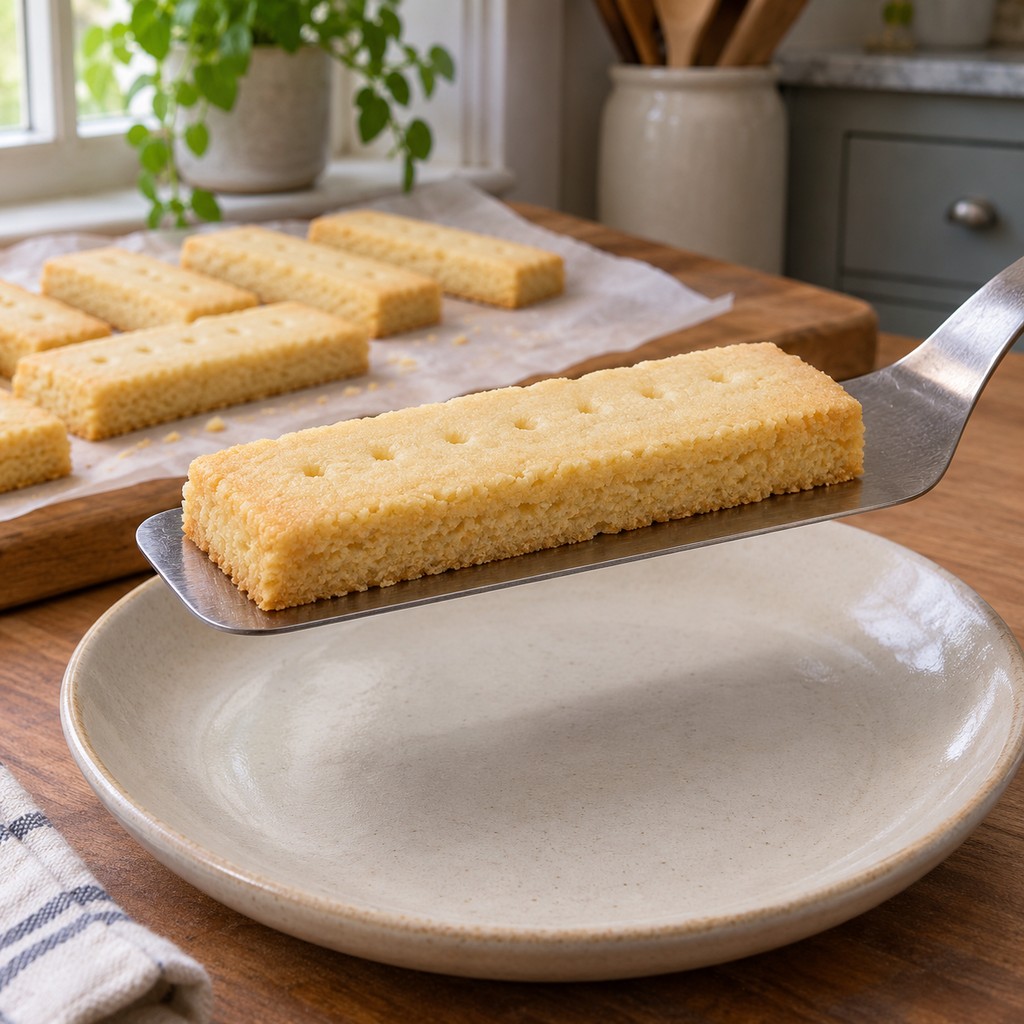
Do not suspend a broad slab from the paper alone if the middle starts to sag. Bring a wide spatula underneath, or use another suitable flat support, and make the transfer over a short distance. Parchment helps release the bake, but it is flexible rather than rigid.
Set the slab down before separating the fingers. If a cut has not gone completely through, finish it with the slab resting flat; do not bend neighboring pieces apart to snap the remaining connection.
Slide a thin, wide spatula beneath each finger so most of its length is supported. Lift it level and lower it close to the serving plate or container before withdrawing the tool. Pinching one end leaves the other end hanging, which is especially unhelpful for long, narrow pieces.
If your pan has no parchment sling, avoid improvising a whole-slab lift. Once the shortbread is cool and the cuts are complete, use a suitable spatula to remove an accessible edge piece first. The opening gives you more room to support the next piece.
Read the break before changing the dough
Where and when the shortbread breaks can help you choose the next adjustment. These observations are clues rather than a diagnosis of every batch.
| What happens | What to check first |
|---|---|
| A finger breaks as one end is lifted | Support more of its length with a wider tool. |
| Neighboring pieces fracture during separation | Check whether the cuts reach through the slab; finish them while supported. |
| Edges chip heavily during cutting | Note whether the slab had cooled completely and whether the blade was dragged sideways. |
| A slab cracks while leaving the pan | Check for sticking edges, sagging parchment, or an unsupported middle. |
| Pieces crumble throughout despite careful lifting | Review dough cohesion, ingredient quantities, thickness, and baking cues. |
Handling advice cannot repair a mixture that never joined properly before baking. The shortbread fundamentals guide explains the broader relationship between dough cohesion and shaping. For the narrower dough problem, see what to check before adding liquid.
On the next batch, note the stage at which the first break occurred: cutting, pan removal, or individual transfer. Change the handling at that point before altering the ingredients. A clean cut, a fully supported cooling period, and a level lift give a delicate finger a better chance of reaching the plate whole.
Bake & panduan terkait
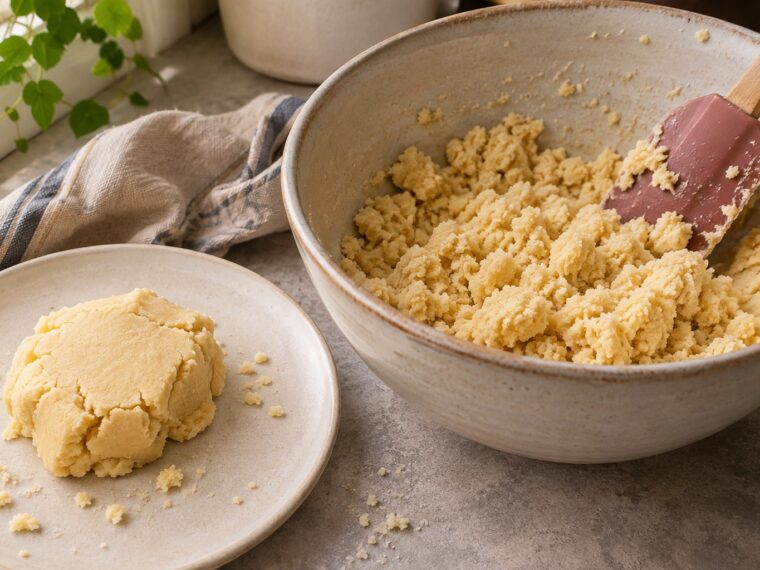
Shortbread Dough Won’t Hold Together: What to Check Before Adding Liquid
Crumbs in the bowl do not always mean shortbread dough is too dry. Check whether they join under…
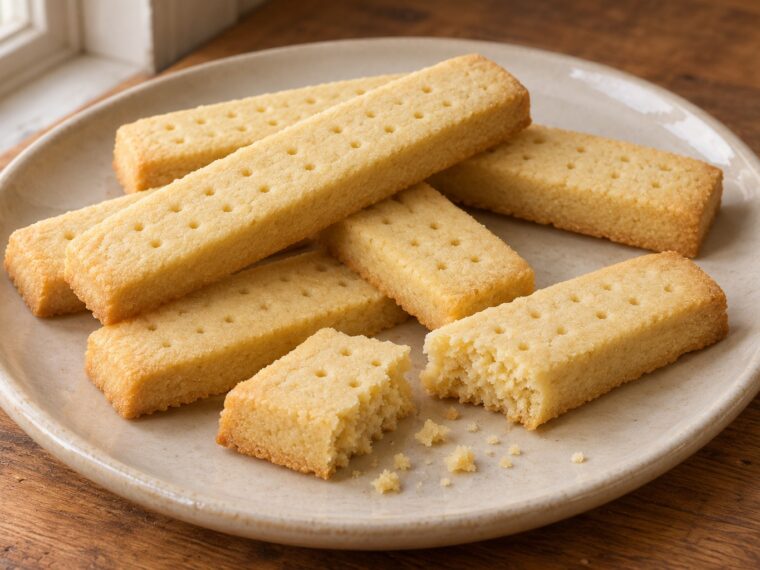
Vanilla Shortbread Fingers: A Press-in-Pan Recipe
Press buttery vanilla dough into one pan, dock the surface, and cut it while warm. Follow the texture…
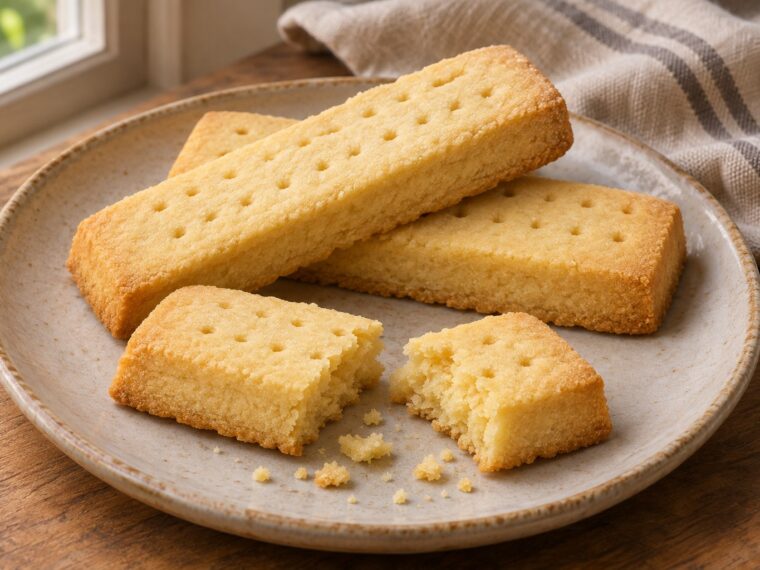
Shortbread Fundamentals: Bringing a Crumbly Dough Together
Shortbread dough can look loose before it becomes workable. Learn what to check, when to stop mixing, and…