
Shortbread Dough Won’t Hold Together: What to Check Before Adding Liquid
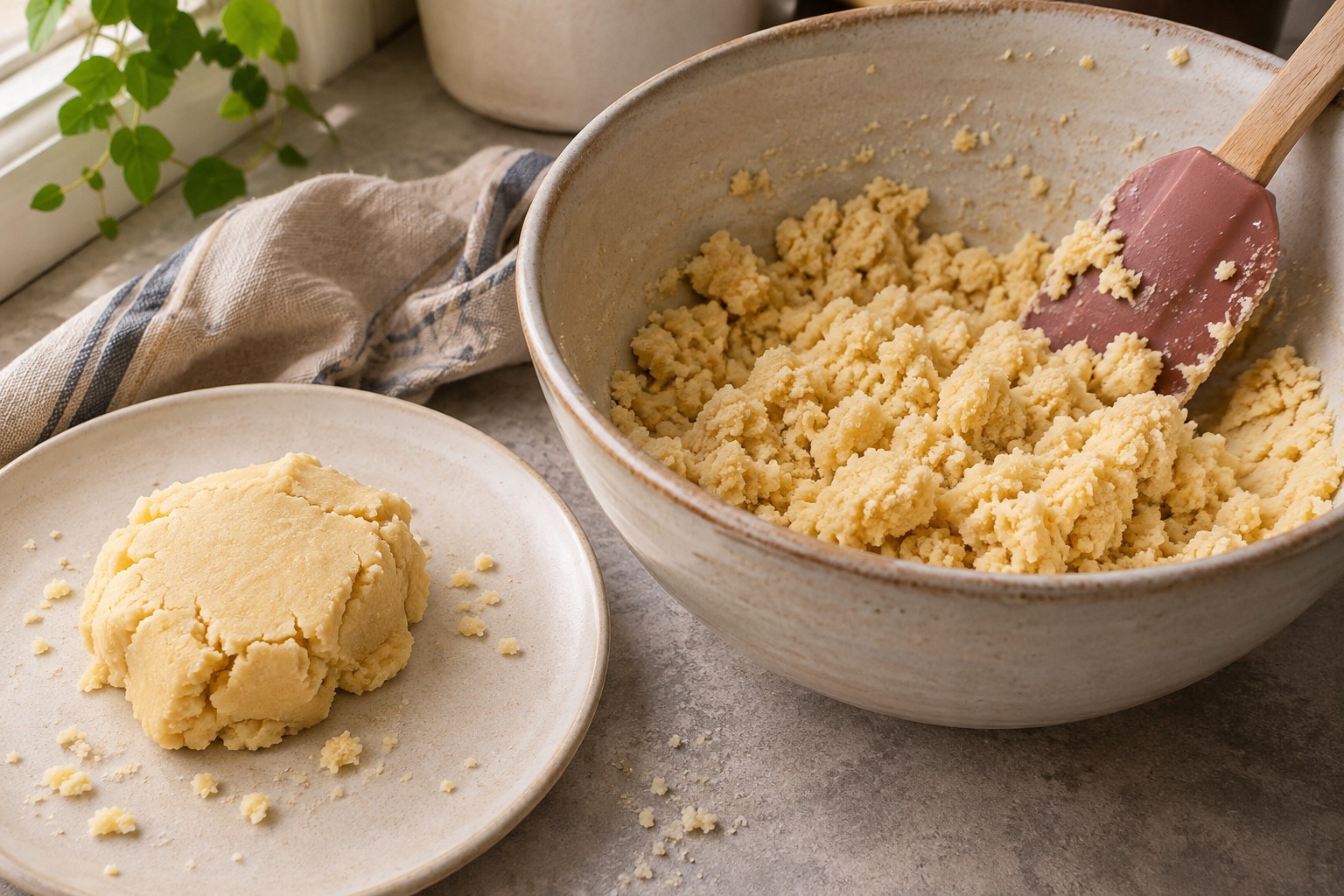
A bowl of loose shortbread crumbs can make a splash of milk seem like the obvious next step. Before pouring, squeeze a small portion together. If it forms a clump that stays intact when you set it down, the dough may already be ready for the shaping method your recipe requires.
When shortbread dough won’t hold together, the useful distinction is between a crumbly appearance and a mixture that genuinely cannot bind. Work through the checks below before changing the ingredients: each points to a different response, and none requires turning shortbread into smooth, stretchy dough.
First, see whether the crumbs join under pressure
With clean, dry hands, gather a small portion and press it together gently. Set it on a clean plate or return it to the bowl. Look for a clump that holds its shape, even if the edges crack or a few crumbs fall away.
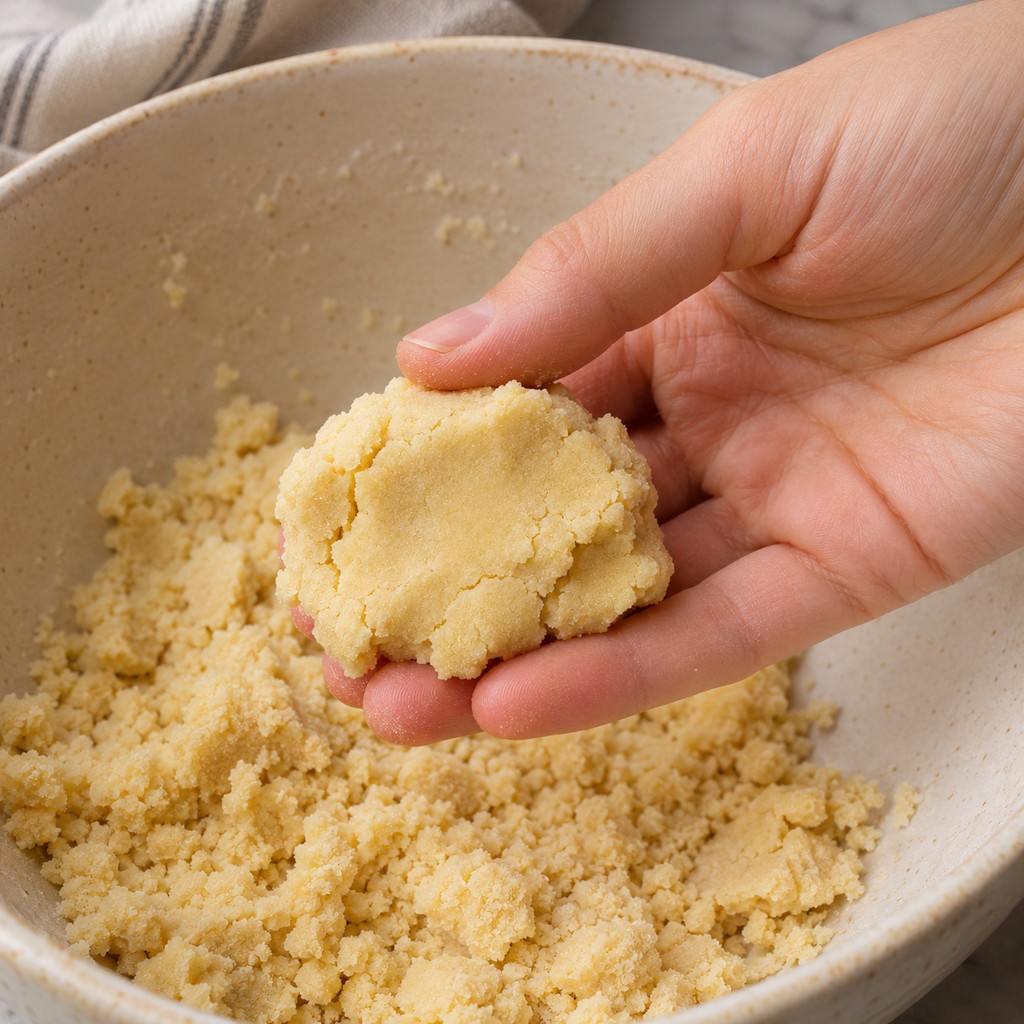
This is a practical handling observation, not a precise test of whether the recipe is correct. A press-in-pan dough can remain loose in the bowl yet form a continuous layer when compacted. Dough intended for rolling or slicing also needs to withstand those particular handling steps.
Nigella’s guidance on making shortbread without a food processor describes a slightly crumbly dough that can still be gathered and patted into a tin. That is a useful reference point: a perfectly smooth ball is not the only workable endpoint.
If your sample holds, try gathering the surrounding crumbs with a spatula and pressing them into the mass. Stop trying to eliminate every crack. The broader shortbread fundamentals guide explains how this texture fits the ingredient balance and different shaping methods.
If the sample immediately collapses into separate particles, leave the milk aside and investigate the bowl.
Scrape the bowl before mixing longer
Pull the mixture away from the bottom and sides with a spatula. Look underneath it: a few buttery clumps on top can hide flour that has barely been incorporated.
Notice the difference between evenly mixed crumbs and separate ingredients. A pale pocket of loose flour beside a buttery mass suggests that distribution is unfinished. Scrape, fold, and continue the recipe’s mixing method gently, watching for more uniform crumbs and larger clumps.
With a mixer, stop the machine before scraping. Do not simply increase the speed because the dough looks sandy. Finish gathering by hand or with a sturdy spatula if that gives you better control.
The stopping point is useful cohesion, not a polished surface. Once the mixture is uniform and holds together as the recipe requires, repeated kneading to make it look like bread dough serves no shaping purpose here.
Check butter condition against your recipe’s method
If the recipe calls for softened butter, consider how it behaved when you began. Butter that resisted the spoon and remained in hard pieces is a different starting point from butter that yielded readily while retaining its shape.
For a softened-butter method, firm butter pieces remaining in loose flour are a reason to address the butter’s condition before adding water. Keep the bowl away from direct heat, allow the mixture to become workable, and resume gentle mixing. Avoid melting patches of dough to hurry the process.
At the other extreme, an oily smear or shiny, slumping mixture is not a straightforward sign of insufficient liquid. If your recipe expects softened butter with some body, let an overly warm mixture firm up before judging its handling again. In a warm kitchen, watch the actual texture rather than relying on a fixed number of minutes on the counter.
These checks are method-specific. A recipe that deliberately starts with cold butter or melted butter has a different sequence. Do not switch to a softened-butter method halfway through simply because it worked for another shortbread recipe.
Also check the fat itself. Butter, spreadable blends, and margarine should not be treated as automatic equivalents. If you substituted, record the product: the batch is now a variation, and adding liquid will introduce another change.
Reconstruct the measurements before correcting the dough
Check the ingredient list against what actually went into the bowl. Start with flour and butter, then look for an omitted extract or another ingredient specified by the recipe.
Ask concrete questions:
- Was the scale displaying grams rather than another unit?
- Was the bowl tared before adding flour?
- Did you use the recipe’s stated flour weight or cup-measuring method?
- Was all the measured butter transferred into the bowl?
- Did you add extra flour while rolling or handling?
- Were any flour, sugar, or fat substitutions made?
If you know extra flour went in, a splash of milk does not restore the original flour-to-butter balance. Likewise, adding butter by eye is not a reliable way to reconstruct an uncertain measurement. Correct a known omission using the recipe’s quantity; avoid trying to solve an unknown error with several guessed additions.
For a large, confirmed measuring mistake, starting again may be more predictable than repeatedly adjusting the bowl. If you continue experimenting, write down every addition so the result does not become your new reference for the unchanged recipe.
Match the next step to what you observed
Use the observations together rather than diagnosing the dough from one feature alone.
| What you see | What to check next |
|---|---|
| Even crumbs that hold as a clump | Gather and shape as directed; extra liquid may be unnecessary |
| Buttery clumps with separate flour underneath | Scrape thoroughly and complete gentle incorporation |
| Hard butter pieces in a softened-butter recipe | Bring the mixture toward the specified working condition |
| Shiny, greasy dough that loses its shape | Reassess warmth before changing ingredient quantities |
| Uniform crumbs that still collapse after mixing | Recheck measurements, substitutions, and recipe-specific guidance |
For example, a pressed dough that joins readily in your palm may only need distributing and compacting in its pan. Our vanilla shortbread fingers recipe uses that approach without rolling flour or an added milk step. Keep its complete formula and method together rather than borrowing its handling cues for every shortbread.
When adding liquid is actually part of the recipe
There is no universal rule that shortbread must never contain added water. King Arthur Baking’s shortbread cookies recipe explicitly permits a small water addition if needed. That permission belongs to its formula; it is not a rescue quantity for a different batch.
Adding water changes the dough’s moisture balance. Milk or egg also introduces ingredients beyond water, so they are not interchangeable corrections. A dough becoming easier to gather does not establish that it will bake with the texture originally intended.
If your recipe provides an adjustment, follow its ingredient, limit, and method. If it provides none, finish the checks above before experimenting. There is no dependable universal spoonful that fixes every crumbly shortbread dough.
Do not taste the raw dough while investigating, even when it contains no egg. The CDC’s raw flour and dough guidance explains that uncooked flour can carry harmful germs. Assess texture by handling, then follow the recipe’s full baking instructions.
Before returning to shaping, describe the result plainly: “holds when pressed,” “separate flour remains,” or “still collapses despite even mixing.” That observation gives you a better next step than “looks too dry”—and a clearer record for your next batch.
Bake & panduan terkait
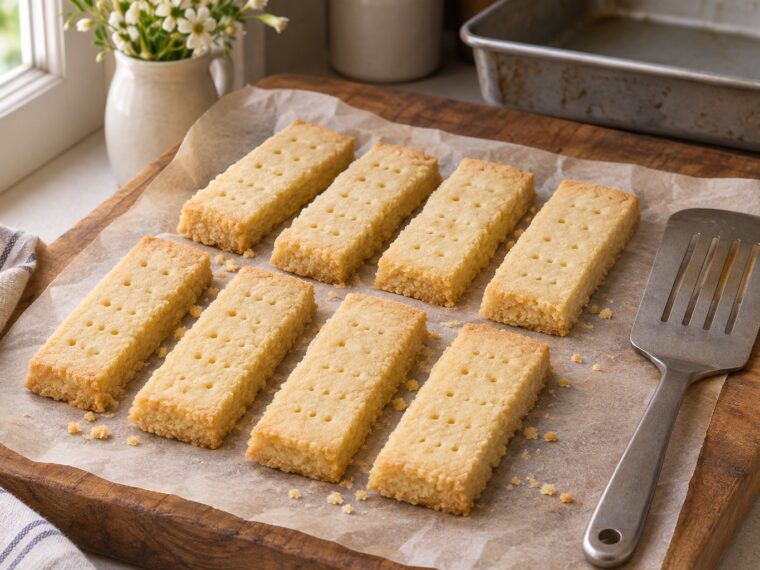
How to Cut and Move Shortbread Without Breaking It
Cutting and lifting are separate stages. Follow the scored lines while a shortbread slab is still warm, then…
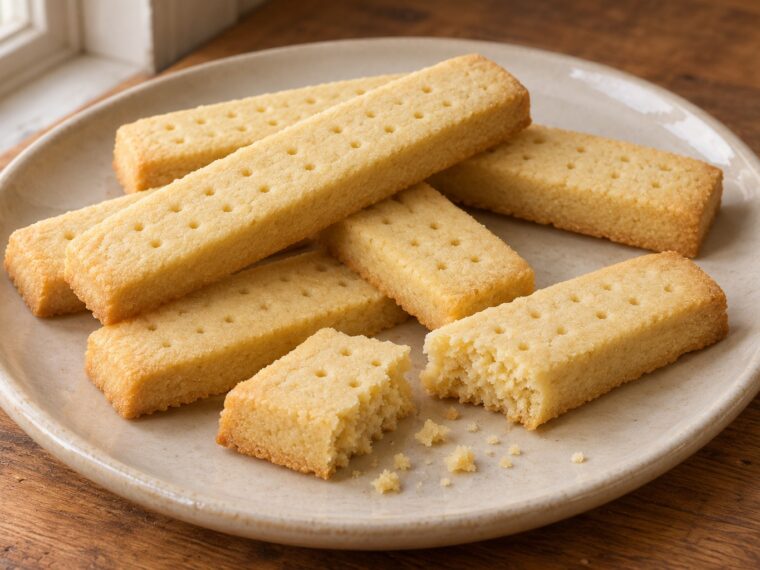
Vanilla Shortbread Fingers: A Press-in-Pan Recipe
Press buttery vanilla dough into one pan, dock the surface, and cut it while warm. Follow the texture…
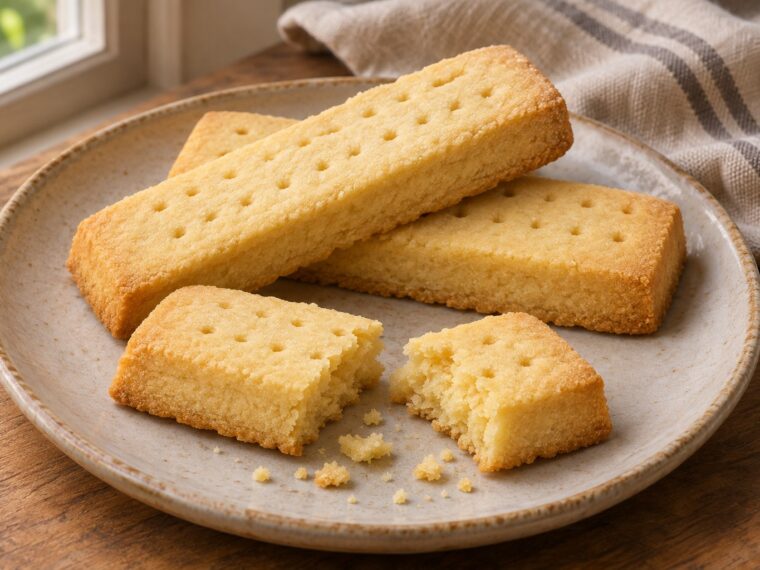
Shortbread Fundamentals: Bringing a Crumbly Dough Together
Shortbread dough can look loose before it becomes workable. Learn what to check, when to stop mixing, and…