
Adding Fruit, Nuts, or Chocolate to Muffins Without Overloading the Batter
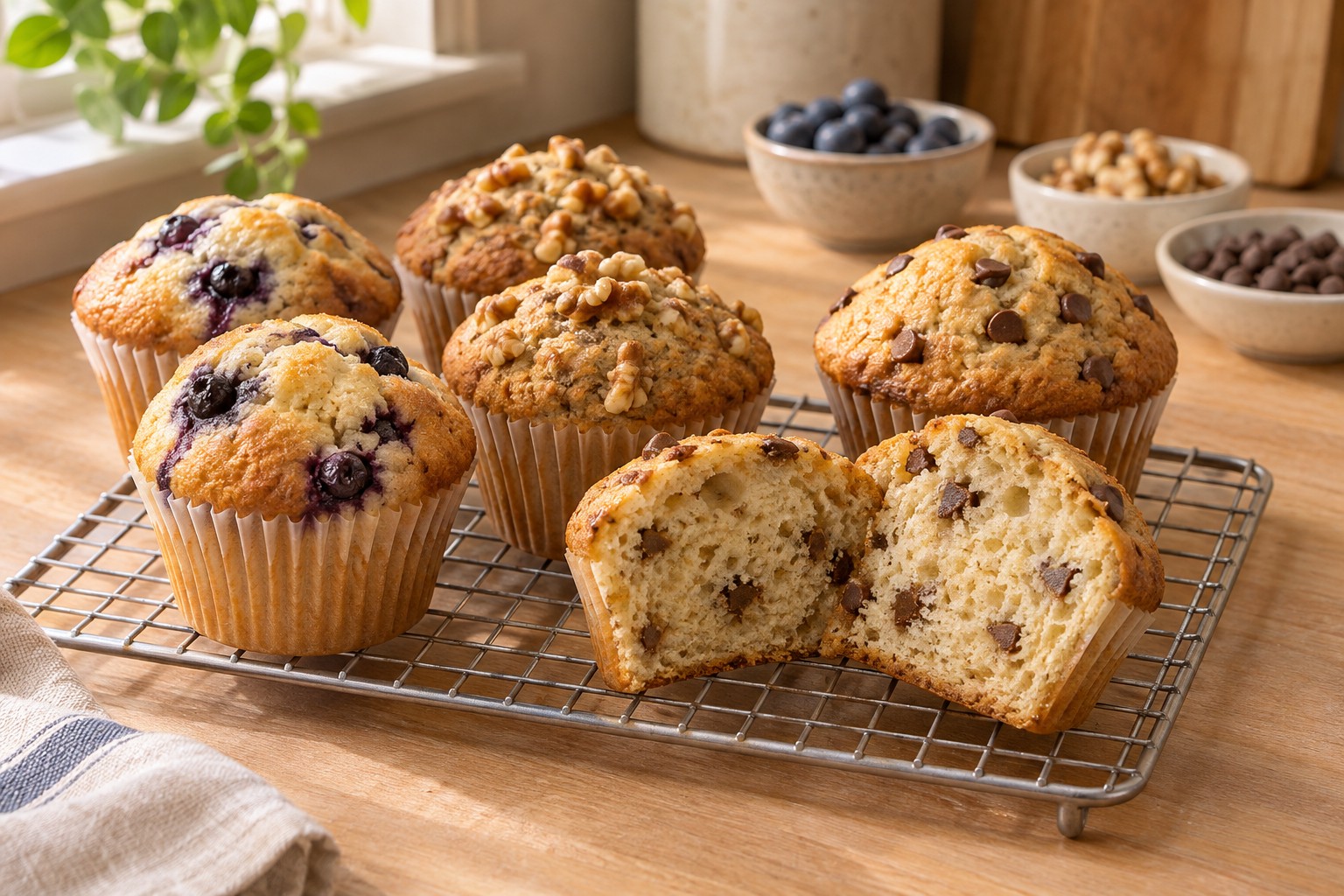
The last handful of chocolate chips can seem too small to put away. Add it to a batter that already contains fruit and nuts, though, and each scoop may become mostly pieces with very little mixture between them. More flavor is appealing; a muffin that breaks apart around its additions is less useful.
When adding fruit, nuts, or chocolate to muffins, start with a recipe that allows those additions, measure their combined quantity, and prepare them before mixing. Piece size and moisture matter alongside the amount. Gentle folding helps distribute the additions, but it cannot make an unlimited quantity fit the formula.
How much can the batter hold?
Use the quantity specified by your chosen recipe as the starting point. There is no single mix-in allowance that suits every muffin batter, even when two recipes make the same number of muffins.
A plain batter designed for variations gives you a clearer starting point than a recipe already balanced around a substantial amount of mashed fruit. Its instructions should identify the permitted additions and any preparation they need. King Arthur Baking’s Mix-and-Match Basic Muffins, for example, provides a fruit variation specifically for its own formula. That allowance belongs to that recipe, rather than every batch containing a similar quantity of flour.
If a recipe permits a combination of additions, treat its stated allowance as a shared amount. Do not give the fruit, nuts, and chocolate a full allowance each. If it specifies only chocolate chips, replacing part with juicy fruit introduces another variable; the shared quantity alone does not establish that the substitution will work.
For a recipe with no mix-in guidance, choose a documented variation for the first attempt. Avoid adding extra flour, milk, or baking powder by guesswork to compensate for an increasingly crowded bowl.
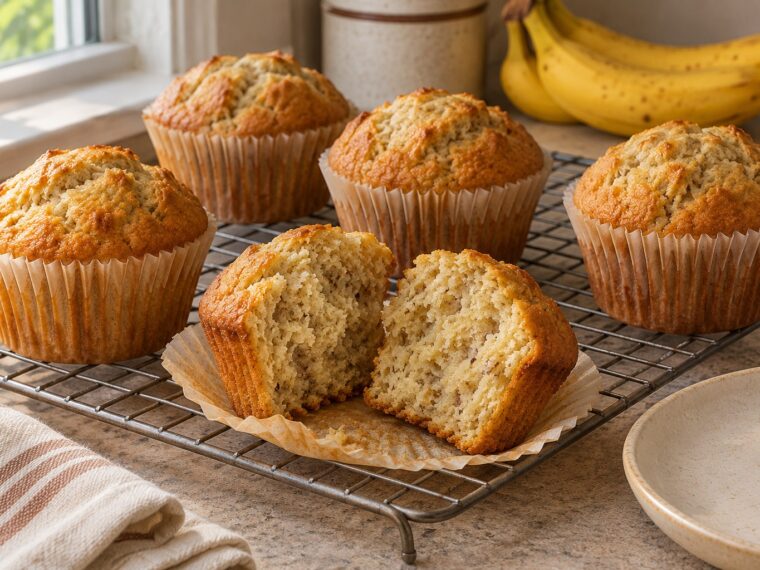
The published banana muffin recipe deliberately starts without extra chunks. Its measured mashed banana is part of the main formula. Keep that baseline intact before considering a separate variation.
Prepare pieces that fit a muffin-sized bite
Aim for pieces that can sit within the crumb rather than dominate an entire bite. Chop additions before the wet and dry mixtures meet, so the finished batter does not wait while you prepare them.
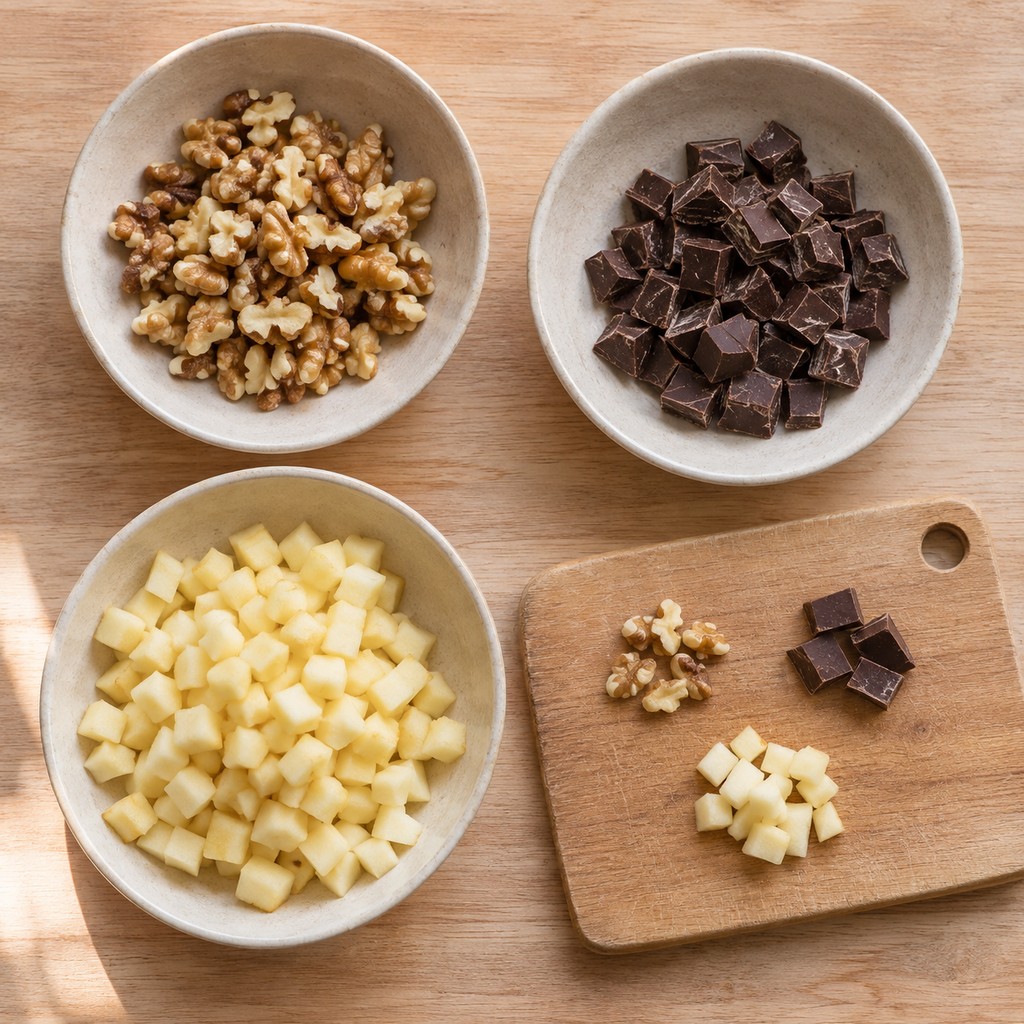
Large walnut halves or thick chocolate slabs are harder to distribute evenly than smaller pieces. Chop nuts into manageable fragments and cut chocolate into reasonably similar chunks. A little variation is fine; the aim is to avoid one oversized piece occupying most of a small muffin’s center.
For firm fruit, follow the recipe’s cutting instructions. A recipe calling for finely diced apple should not receive large wedges. Likewise, keep delicate berries whole unless instructed otherwise; chopping them creates more exposed, juicy surfaces.
Weigh or measure additions in the condition the recipe specifies: chopped, drained, or otherwise prepared. A cup of whole nuts and a cup of finely chopped nuts do not represent the same packing arrangement. When a recipe supplies a weight, keep that weight rather than substituting an unrelated volume conversion.
Fresh fruit, dried fruit, and purée need different decisions
Fruit can enter a muffin as separate pieces or as part of the wet mixture. Those roles are different, so a handful of berries, a spoonful of raisins, and mashed banana should not be treated as interchangeable additions.
| Addition | What to consider | Practical approach |
|---|---|---|
| Fresh fruit pieces | Size, surface moisture, and juicy pockets | Follow the specified cut and draining instructions; avoid pouring collected juice into the bowl unless directed. |
| Frozen berries | Whether the recipe expects frozen or thawed fruit | Follow that instruction exactly and have the berries ready for their stated mixing stage. |
| Dried fruit | Concentrated pieces and any soaking liquid | Use the specified quantity; soak and drain only when the recipe directs. |
| Mashed or puréed fruit | It becomes part of the main mixture | Choose a formula built around it rather than using it as a direct replacement for chips or nuts. |
Fresh and frozen fruit
For washed fresh fruit, remove clinging surface water before measuring and adding it as directed. Draining removes loose liquid; it does not turn a juicy fruit into a dry ingredient. King Arthur’s muffin variation specifically calls for finely chopped, well-drained fresh fruit, which is a useful reminder to read preparation details as part of the ingredient list.
Do not automatically thaw frozen berries. Mississippi State University Extension’s muffin guidance lists frozen berries used without thawing. Other formulas may specify different handling, so follow the recipe you are actually baking.
Some color streaking from frozen fruit is expected; King Arthur’s basic muffin guide notes this possibility. Purple streaks alone do not mean you need to stir longer. Further stirring will not restore a pale batter.
Dried fruit and fruit purée
Keep raisins or other dried fruit separate from the idea of adding fresh fruit. If a recipe asks for soaking, follow its directions for draining and for whether any liquid goes into the batter. Do not improvise a soak and then pour the remaining liquid into an unchanged formula.
Mashed banana, applesauce, and other purées require a recipe that accounts for them. Replacing chocolate chips with the same volume of purée changes the mixture itself, rather than simply changing the pieces suspended within it. A fruit-based recipe is the better starting point when that is the flavor and texture you want.
Fold additions in at the recipe’s stated stage
Have the measured additions beside the bowl before final mixing begins. Some recipes coat fruit in the dry ingredients; others fold additions into an almost-combined batter. Follow that sequence rather than applying one rule to every muffin.
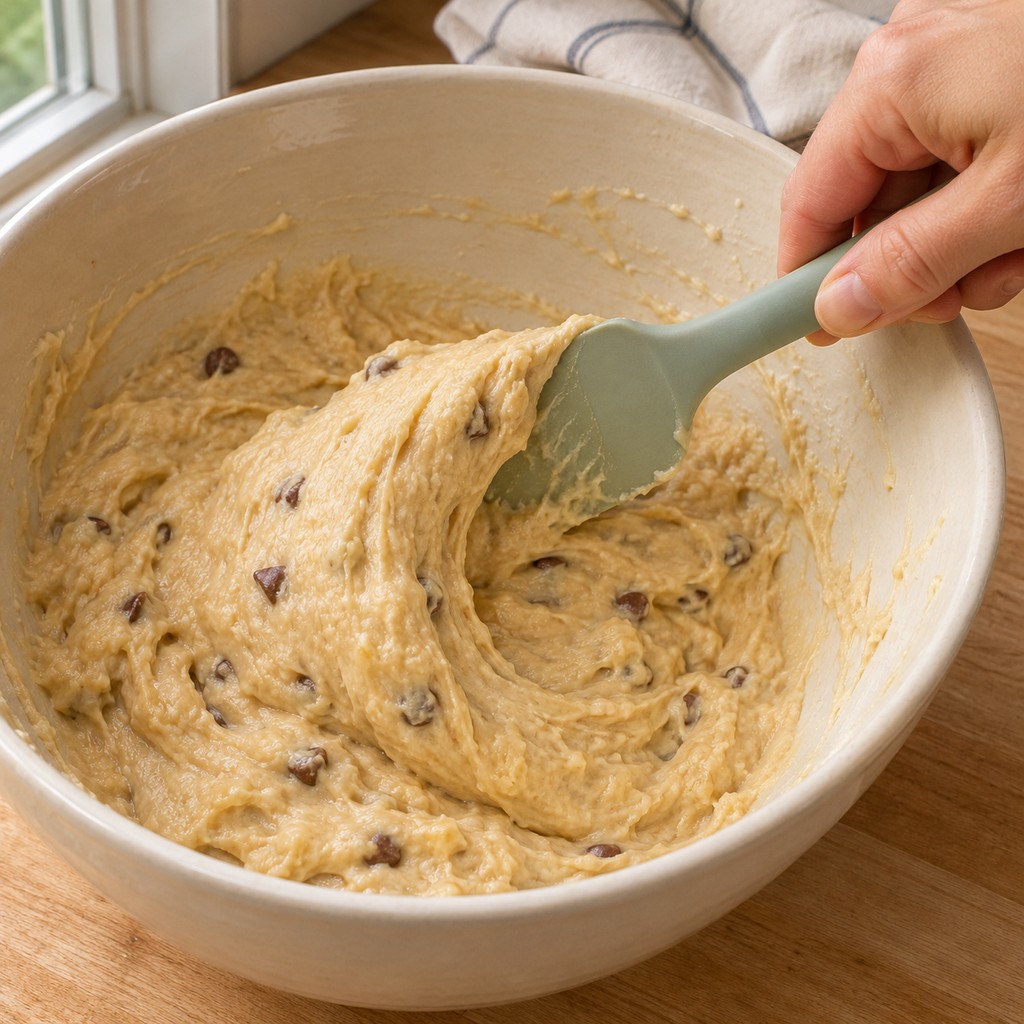
For additions folded in near the end:
- Bring the wet and dry mixtures together until mostly incorporated, as the recipe directs.
- Scatter the prepared additions across the mixture instead of dropping them into one deep pile.
- Sweep a flexible spatula down the side and underneath, then lift the batter over itself. Turn the bowl to reach another area.
- Stop when the additions are reasonably distributed and no loose flour pockets remain.
Look underneath the mixture, not just across its surface. A pocket of chips at the bottom needs a fold that reaches it; rapid circles through the top of the bowl will not solve that efficiently.
Do not chase perfectly equal spacing or a smooth finish. For the broader mixing sequence, see Muffin Method Essentials: Mixing for a Tender Crumb.
Does coating fruit in flour solve sinking?
A flour coating is a recipe-specific technique, not permission to add more fruit. King Arthur’s mix-and-match recipe incorporates its fruit into the dry ingredients before adding the liquids to help distribution.
If your recipe calls for a coating, use its stated method and quantity. Do not keep adding flour until every piece looks heavily dusted. Coating also does not remove juice or correct oversized chunks, so preparation and the total quantity still need attention.
Portion without crowding the cups
Keep the recipe’s fill level even if your variation produces more mixture than expected. Additional ingredients increase what you have to portion; they do not create more space in each muffin well.
As you scoop, check whether each portion contains both batter and additions. If the last portion is almost entirely nuts or chips, note the uneven distribution for the next batch. Avoid repeatedly stirring the whole bowl between scoops.
Do not force leftover mixture into already full cups. Use another suitable prepared pan if available, following the recipe’s portion size. Changing the quantity or size of the muffins also means the original baking time needs to be treated as guidance rather than a promise.
When checking doneness, distinguish melted chocolate or a fruit pocket from wet batter. If a skewer hits an obvious addition, check nearby central crumb and another muffin. A browned top does not tell you everything about the middle.
Read the cooled crumb before changing the next batch
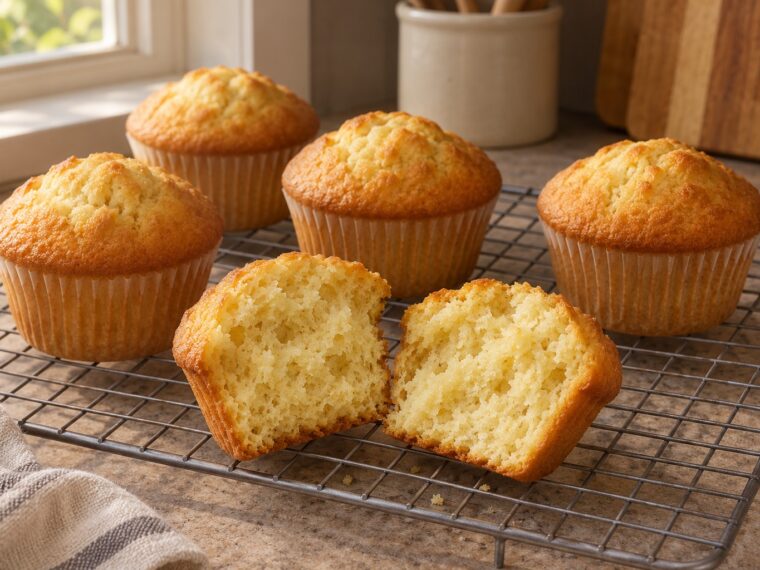
Let a muffin cool before cutting through its center. Look for crumb holding the pieces together, then compare what you see with the ingredient preparation and mixing notes from that batch.
Pieces cluster near the bottom. Revisit the recipe’s mixing stage, piece size, and expected batter consistency. Confirm that fruit was prepared as directed before adding extra flour to the next batch.
The muffin breaks apart around many additions. Check the combined quantity first. Smaller pieces may distribute more easily, but chopping does not reduce the total amount you added.
There are damp pockets beside fruit. Check the fruit’s size, draining instructions, quantity, and the surrounding crumb’s doneness. A juicy piece is different from a broad layer of uncooked batter.
The crumb is chewy with long channels. Review the extra folding used to distribute additions. The companion guide Why Muffins Turn Tough or Develop Long Tunnels examines mixing and flour variables in more detail.
Record the addition type, prepared quantity, and any departure from the recipe. For the next attempt, choose the clearest correction: restore the stated amount, cut the pieces as directed, or follow the intended mixing stage. Leave enough batter between the good things you add for the muffin itself to hold together.
Bake & panduan terkait
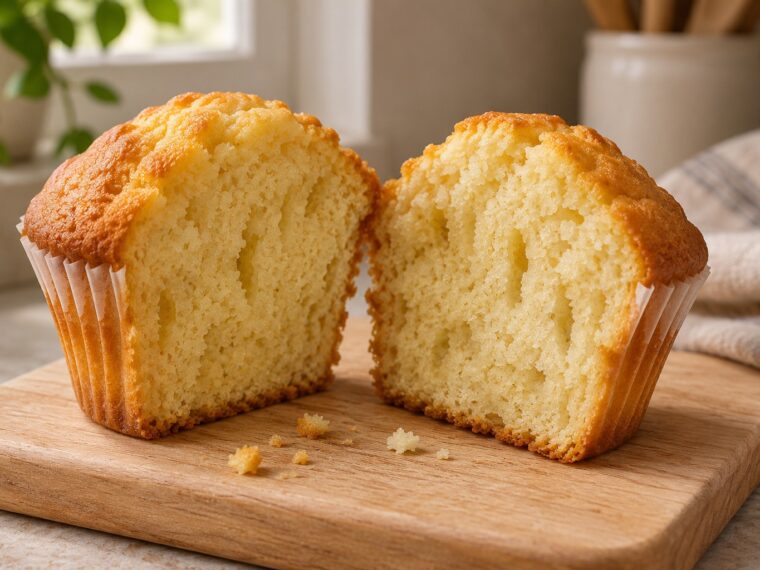
Why Muffins Turn Tough or Develop Long Tunnels
Long channels and a chewy crumb often point toward excessive mixing, but flour measurements and baking conditions also…
Banana Muffins: A Recipe Guided by Fruit Ripeness and Batter Texture
Start with soft, ripe bananas, then weigh the mash before mixing. This banana muffin recipe explains what the…
Muffin Method Essentials: Mixing for a Tender Crumb
A slightly lumpy muffin batter can be ready for the pan. Learn how to combine ingredients thoroughly without…