
Why Muffins Turn Tough or Develop Long Tunnels
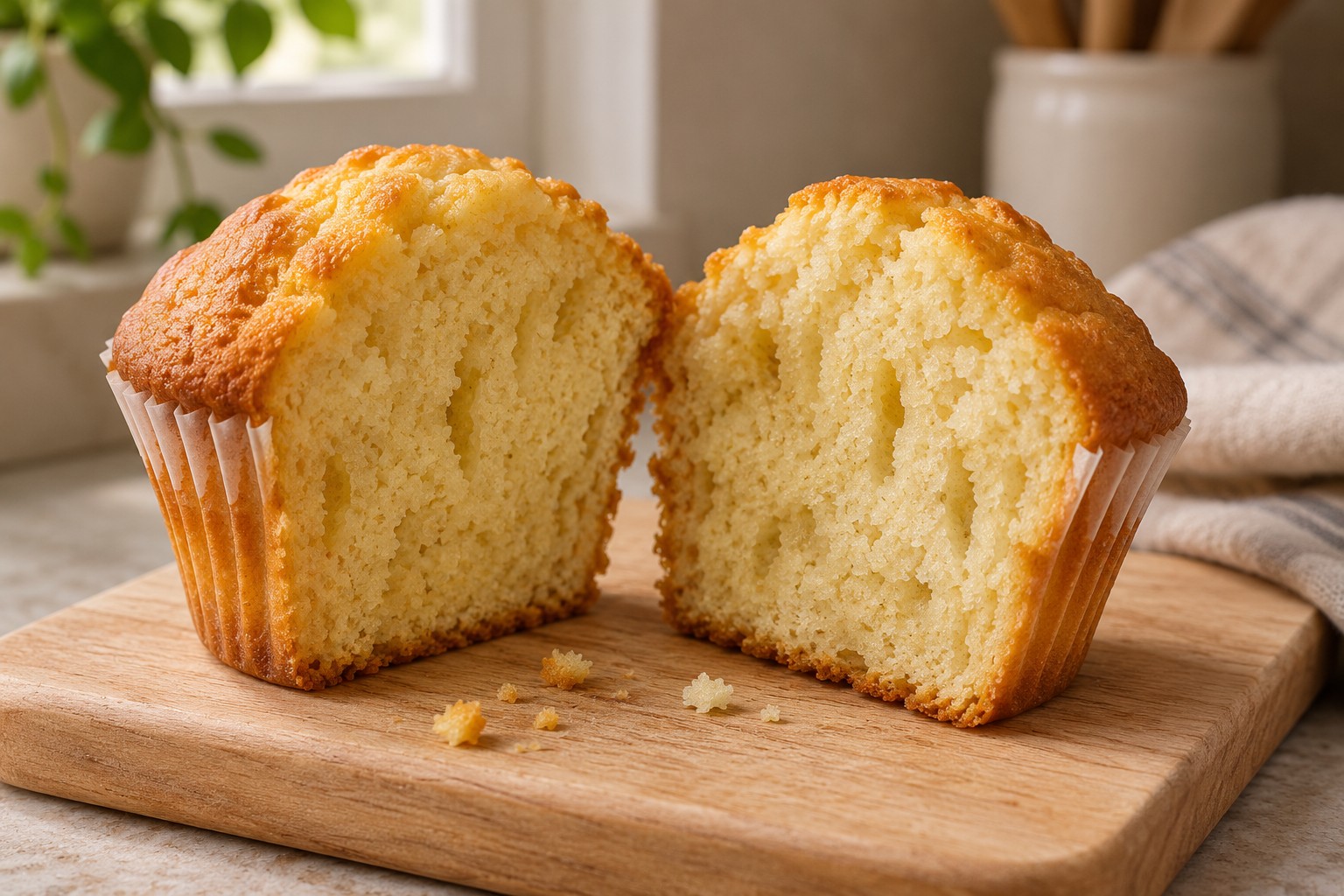
A muffin can have a nicely browned top yet feel surprisingly chewy when you pull it apart. Slice another one and you may find long channels running through the crumb, rather than the small, scattered holes you expected.
Excessive mixing after the flour becomes wet is a common explanation for tough muffins and elongated tunnels. It is worth checking first, especially if you beat the batter until smooth. But the crumb cannot tell the whole story: flour choice, ingredient quantities, and baking conditions can produce overlapping problems.
Read the cooled crumb before changing the recipe
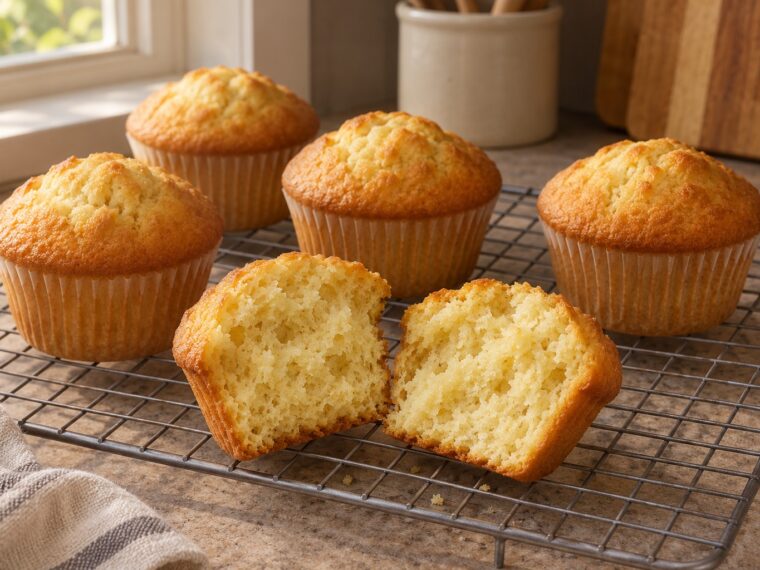
Let a muffin cool before cutting vertically through its center. Look at the shape of the holes, then gently pull a piece apart. Is the crumb resistant and chewy, dry and crumbly, or damp and compressed? Those descriptions lead to different questions.
A few irregular holes are not automatically a fault. More useful clues are repeated, elongated channels through an unexpectedly firm crumb. A cavity beside a fruit piece also deserves a different interpretation from channels appearing throughout a plain muffin.
| What you notice | What to investigate first |
|---|---|
| Long channels with a chewy, resistant crumb | Mixing after flour was added; flour type |
| Dry, tight crumb without prominent tunnels | Flour quantity and baking duration |
| Dark exterior with a wet center | Oven setup, portion size, and center doneness |
| Dry flour pockets or pale powdery streaks | Incomplete incorporation and scraping |
Treat these as starting points rather than a diagnosis from appearance alone. Keep the recipe beside you and note any departures from its ingredients or method.
Why extra mixing can make muffins tough
Wheat flour contains proteins that form gluten when hydrated. Mixing encourages that network to develop further. Some structure helps a muffin hold together, but excessive development works against the tender texture you want. King Arthur Baking’s explanation of gluten describes how hydration, agitation, and flour strength influence the finished crumb.
This explains why a batter can be fully combined yet still benefit from being left alone. Continuing to beat it simply to remove every soft lump adds mixing after the useful work is finished.
Long tunnels are another recognized sign of overmixing in muffin batter. Mississippi State University Extension’s quick-bread guidance associates overbeating with a heavy, irregular texture, internal tunnels, and peaked tops. A tall top by itself, however, is not enough to establish that you overmixed.
Think back to the bowl. Did you whisk repeatedly after the flour disappeared? Use an electric mixer for a batter intended to be folded by hand? Stir again and again while dividing the portions? Those observations are more useful than trying to diagnose the entire process from one hole.
Find the stopping point without leaving dry flour
For a conventional muffin-method batter, stop when the wet and dry ingredients are incorporated throughout the bowl, with no loose flour pockets remaining. Small soft lumps and an uneven surface can remain; powdery centers inside dry clumps need attention.
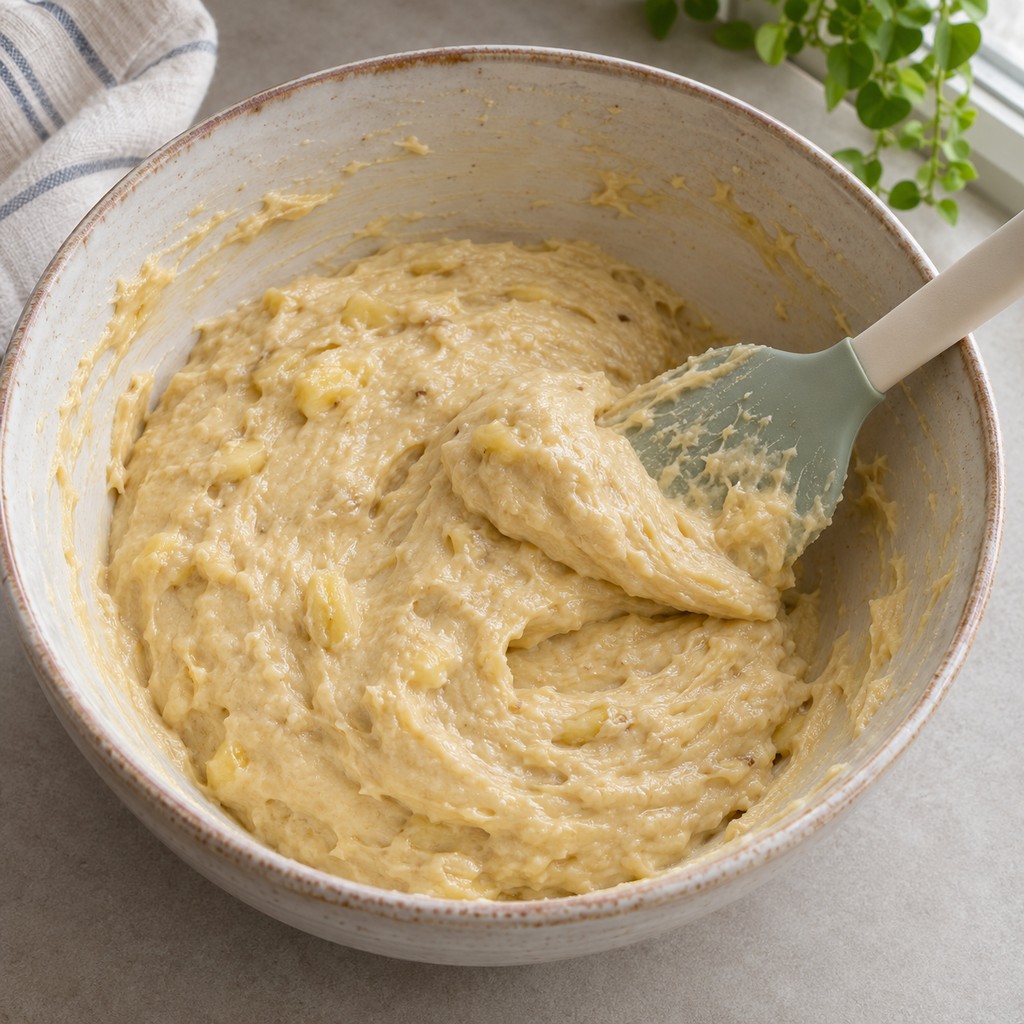
Use a spatula to reach down the side, sweep underneath, and lift the batter over itself. Turn the bowl so you reach different areas. If one dry pocket remains, direct the next fold toward it rather than rapidly stirring the whole bowl.
Prepare the separate mixtures thoroughly before combining them. Break up the eggs in the wet mixture and distribute the leavener through the dry ingredients as the recipe directs. That reduces the amount of unfinished work waiting for the final mixing stage.
There is no dependable universal stroke count. Bowl shape, batch size, and the way you move the spatula change how quickly ingredients combine. Watch the batter instead of counting toward a promised number.
For the full preparation sequence, use Muffin Method Essentials: Mixing for a Tender Crumb. Here, the important troubleshooting question is whether you continued mixing after incorporation was complete. Recipes that use a creaming method need their own stated sequence.
Check flour choice and quantity together
If you mixed gently but the crumb still feels resistant, check the flour package. Higher-protein wheat flour has greater gluten-forming potential. Bread flour can therefore change the result when a recipe expects all-purpose flour; careful folding does not make the two ingredients equivalent.
For flour sold in Indonesia, match the product description to the recipe rather than relying only on a familiar brand name. If the recipe specifies plain, medium-protein wheat flour, confirm that description on the package. Do not assume that self-raising flour or a gluten-free blend is an equal replacement.
Next, revisit the quantity. Did you use the supplied weight, or scoop flour into a cup using a different method from the recipe? Did an extra spoonful go in because the batter looked loose? Too much flour changes the balance even when your mixing technique is restrained.
Avoid switching straight to cake flour as a universal repair. Returning to the specified flour and measurement gives you a clearer comparison than introducing another substitution.
Thick batter does not need to be beaten thinner
Some muffin batters sit in soft mounds; others settle more readily. Thickness must be judged against the particular recipe. It does not establish whether the batter is overmixed or correctly balanced.
Imagine a banana batter that looks thicker than a plain muffin mixture you made last week. Beating it longer to make it flow adds mixing without answering the real question: is this consistency expected for this formula?
Before adding anything, check whether you omitted liquid, added flour twice, or changed the amount of mashed fruit. Restore a genuinely missed measured ingredient where practical, but avoid alternating unmeasured milk and flour to chase an imagined texture.
The published banana muffin recipe provides a specific example: its prepared fruit is weighed, and the finished batter is described as thick and scoopable. That cue belongs to that recipe rather than every muffin batter.
If you added fruit, nuts, or chocolate beyond the stated quantity, record that change too. Repeated folding to distribute extra additions can extend the final mixing. The companion guide to adding fruit, nuts, or chocolate without overloading muffin batter addresses those choices separately.
Separate mixing problems from baking problems
If the muffins are chiefly dry, or the outside browns well before the center sets, look beyond the mixing bowl. Columbus State Community College’s quick-bread troubleshooting guide lists excessive mixing, overbaking or excessive oven heat, and an imbalance of flour and liquid among possible causes of dry, tunneled muffins.
Start by restoring the recipe’s baking setup: the specified pan, portion size, oven mode, rack position, and temperature sequence. Do not borrow a hotter starting temperature from another muffin recipe simply because its tops looked taller.
Record whether every muffin was affected or only those in one part of the pan. Also note whether portions differed noticeably. An uneven pattern gives you a reason to investigate the setup alongside the batter.
Use the recipe’s center-doneness cues as well as its timing. When a skewer test is specified, distinguish wet batter from a few crumbs or a fruit pocket. Removing muffins with an unbaked center is not a useful way to preserve tenderness, and continuing well beyond doneness can make dryness harder to separate from toughness.
Do not add more baking powder to compensate for a firm crumb. Confirm the specified leavener and quantity first; extra leavener does not undo excessive mixing.
Choose one useful change for the next batch
Begin with the clearest departure you can identify. If you beat an already incorporated batter smooth, keep the ingredients and baking setup consistent and stop earlier next time. If you used bread flour instead of the specified plain flour, restore the flour before drawing conclusions about your folding.
A short note is enough: “No dry pockets; stopped while slightly lumpy; used specified flour weight; checked center before removal.” Compare that record with the cooled crumb.
When several known mistakes occurred, correct them and record them together. You may not be able to credit one change, but you will have a more useful starting point. The goal is a tender, properly baked muffin—not a perfectly smooth bowl of batter.
Bake & panduan terkait
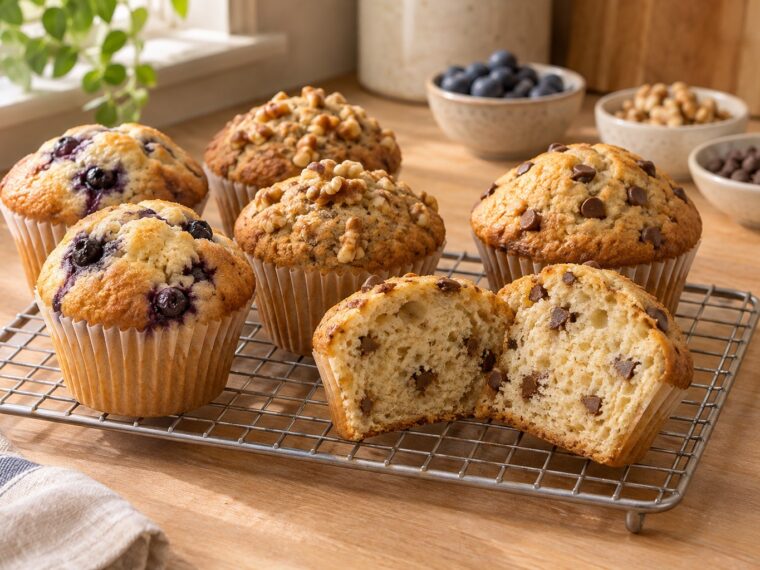
Adding Fruit, Nuts, or Chocolate to Muffins Without Overloading the Batter
A good muffin needs enough batter between its additions to hold a tender crumb. Learn how quantity, piece…
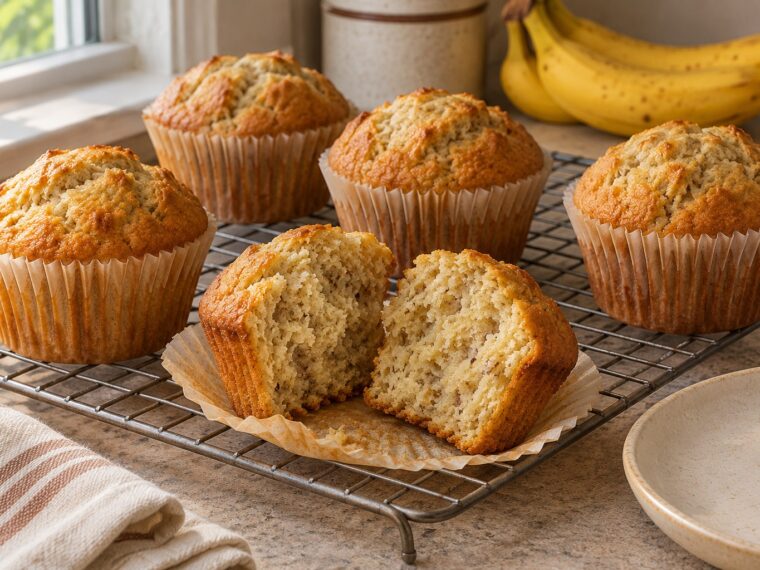
Banana Muffins: A Recipe Guided by Fruit Ripeness and Batter Texture
Start with soft, ripe bananas, then weigh the mash before mixing. This banana muffin recipe explains what the…
Muffin Method Essentials: Mixing for a Tender Crumb
A slightly lumpy muffin batter can be ready for the pan. Learn how to combine ingredients thoroughly without…