
Brownie Texture Explained: Fudgy, Chewy, and Cakey
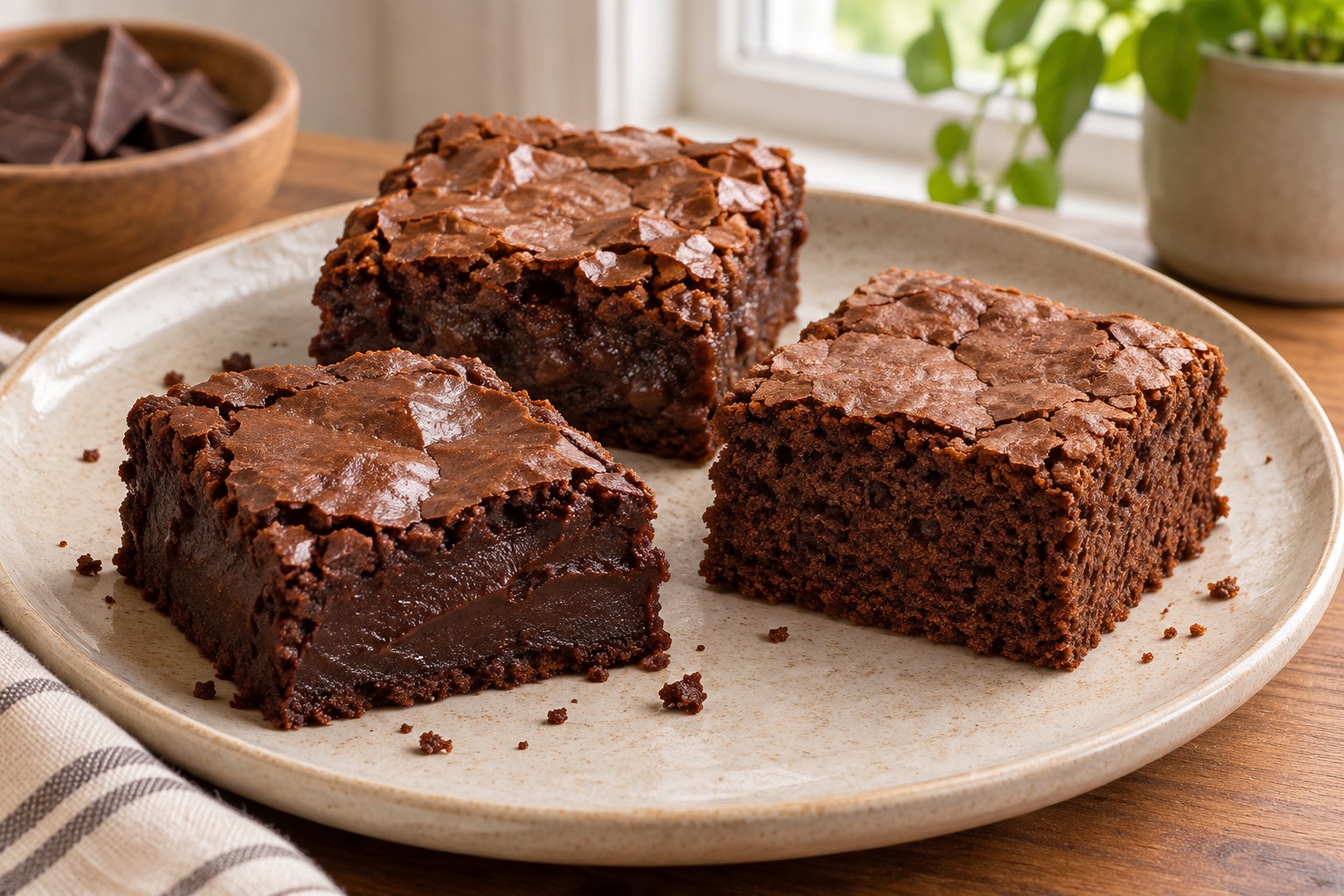
A brownie can cut into a dense square that seems almost creamy, or lift from the pan with a soft, cake-like crumb. Between those two is the brownie with a little resistance in each bite: chewy, but still moist. All three can be delicious, and none is simply a matter of leaving the pan in the oven for a different number of minutes.
Brownie texture begins with the balance of flour, fat, sugar, eggs, and chocolate. Mixing, pan size, baking, and cooling then shape how that particular batter sets. Once you know what each stage contributes, it becomes easier to choose a recipe that aims for the texture you actually want.
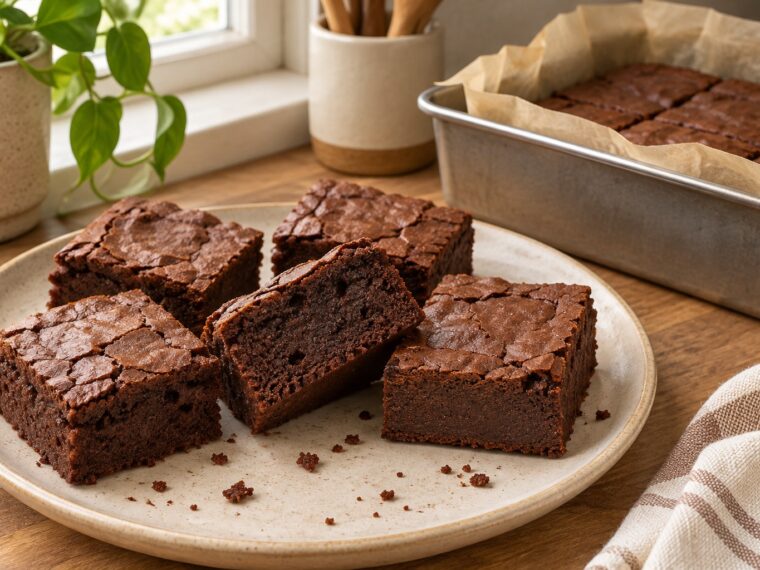
Three brownie textures, three different bites
These descriptions are useful guides, not rigid categories. A brownie can be both fudgy and chewy, or have a cakier edge around a dense center. Judge the cooled interior as well as the surface.
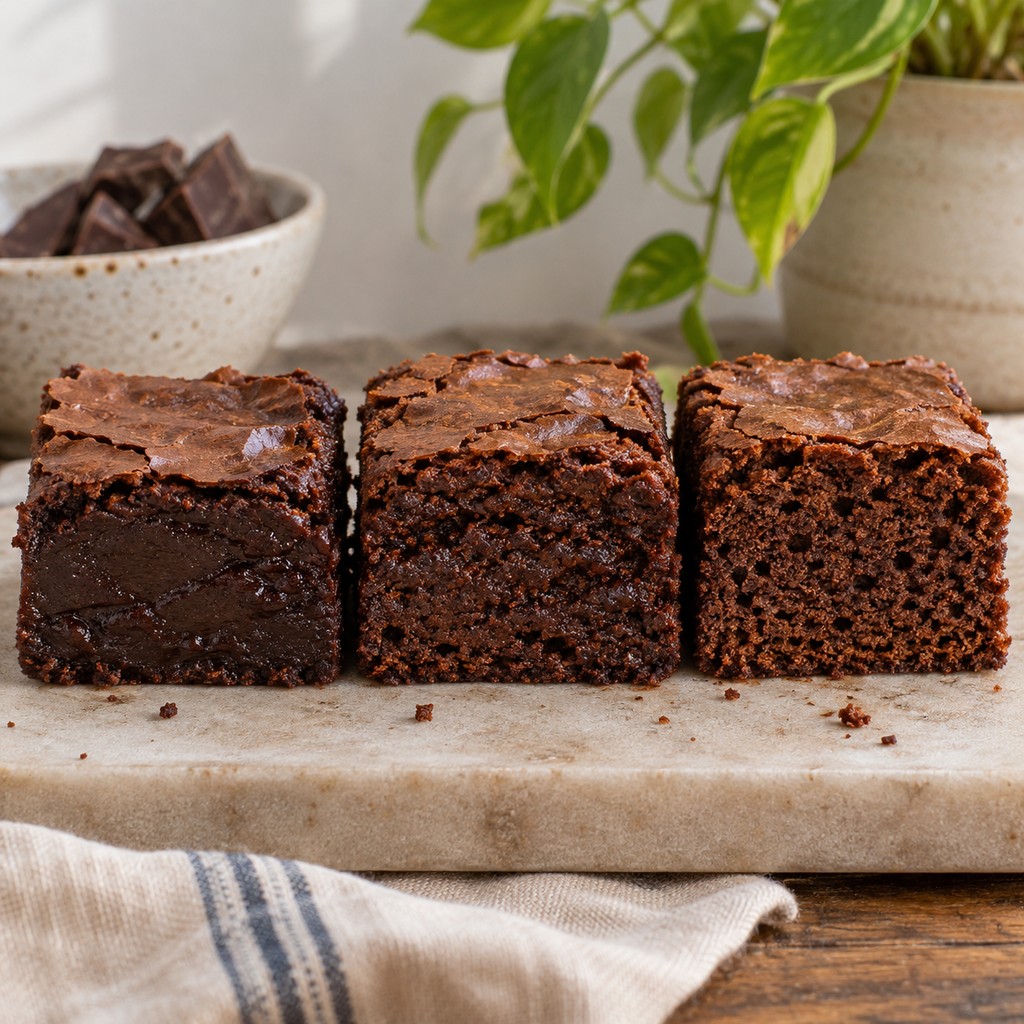
| Texture | What to look for after cooling | What the bite feels like |
|---|---|---|
| Fudgy | Compact, moist-looking interior with very little visible crumb | Dense and soft, with a rich, almost truffle-like quality |
| Chewy | Close, cohesive interior that holds together when cut | Offers some resistance before yielding, rather than crumbling immediately |
| Cakey | More visible, fine crumb and a lighter-looking interior | Tender and springier, closer to a dense chocolate cake |
A glossy top does not, on its own, tell you which interior is underneath. Neither does a dark color: cocoa, chocolate, and baking time all influence appearance. Break or cut a cooled piece and notice whether it bends, compresses, or breaks into crumbs.
Start with the balance in the recipe
A recipe is a system. Changing one ingredient can affect sweetness, structure, moisture, and baking behavior at the same time. The following tendencies are most useful for comparing complete recipes, not for making unmeasured corrections to a bowl of batter.
Flour and fat
Flour helps give brownies structure. Compared with otherwise similar formulas, a higher proportion of flour tends to produce a more substantial, cake-like crumb; less flour relative to fat tends toward a denser result. Fat contributes richness and tenderness. King Arthur Baking’s comparison of brownie styles shows how these proportions vary across its own recipes.
That does not mean every cakey brownie is dry or every dense brownie needs extra butter. For a first batch, weigh the flour and fat as the recipe specifies. Adding flour to make a sticky batter easier to handle, or adding butter to make it look richer, changes the balance before you know what the original formula was meant to do.
Sugar and eggs
Sugar contributes more than sweetness: it also affects how soft and moist the finished brownie feels. A chewy recipe may use a relatively high proportion of sugar alongside its other ingredients. Reducing it substantially can change texture as well as flavor, so choose a formula designed for the sweetness you prefer rather than assuming a large reduction will leave the same bite.
Eggs bring both liquid and structure. Their effect depends on the rest of the recipe and on how they are mixed; more egg relative to the other ingredients can contribute to a cakier result. Use the egg size or weight requested where provided. If a recipe asks for beaten egg by weight, beat it first and measure the required amount rather than estimating a fraction of an egg by sight.
Cocoa, chocolate, and leavening
Cocoa powder and melted chocolate are not interchangeable spoon for spoon. Chocolate brings its own fat and, depending on the product, sugar; cocoa powder behaves differently in the mixture. A cocoa recipe and a melted-chocolate recipe can both make appealing brownies, but their ingredient balances are built around different starting points.
Baking powder can help create a lighter, more raised texture. Many dense brownie formulas omit it. Its presence is one clue when comparing recipes, not a guarantee of a particular crumb: the quantities of flour, eggs, fat, and liquid still matter.
When shopping in Indonesia, check the product label as well as the name on the front. Unsweetened cocoa powder, sweetened chocolate drink powder, baking chocolate, and compound coating are different products. Follow the ingredient description in the recipe rather than treating them as automatic equivalents.
Mixing changes what goes into the oven
Read the instructions before deciding how vigorously to mix. One formula may ask you to whisk eggs and sugar; another may simply have you stir ingredients together. The batter’s intended appearance depends on that method.
If a recipe calls for whisking eggs and sugar, follow its stated time or visual cue. Incorporating more air than the method intends can change the result, while stopping well before the stated endpoint can also produce a different batter. Once flour is added, mix as directed until it is incorporated, scraping the bottom and sides of the bowl so dry pockets do not remain. Avoid continuing to beat just to make the batter look like another recipe’s photograph.
Before the pan goes into the oven, check that the batter is evenly mixed and spread into the corners. A thick batter can be entirely appropriate for one brownie recipe and unexpectedly stiff for another. If yours looks very different from the recipe’s description, review the measured ingredients and any substitutions before adding liquid or flour.
Do not taste raw batter. Flour and eggs can contain harmful bacteria; the FDA’s flour-handling guidance recommends baking foods made with them and washing hands and equipment after handling them.
Give the batter the pan and heat it expects
The same quantity of batter spreads to different depths in different pans. A wider pan makes a shallower layer, which may reach its endpoint sooner; a smaller pan makes a deeper layer, so the center may need more time while the edges continue to bake. Pan material, oven behavior, and rack position add further variables.
Start with the dimensions and pan type in the recipe. Measure the inside of the pan, rather than including its rim, and use the stated oven setting and rack position. If your pan differs, do not assume the printed baking time will transfer unchanged. The recipe disclaimer explains why equipment, ingredients, and substitutions can all affect the result.
Preheat fully and begin checking at the point your recipe recommends. If the edges repeatedly become dry before the center sets, note the pan dimensions, material, oven setting, and actual baking time. The planned guide Why Brownies Turn Dry at the Edges Before the Center Sets addresses those variables in more detail.
Read doneness for the recipe you chose
A fudgy brownie should be baked through according to its recipe, even though it may remain soft and dense. A wet center is not a reliable shortcut to fudginess. Follow a dependable recipe’s oven temperature, pan size, baking time, and specific doneness instructions together.
Look across the pan, not only at the crust. The edges may appear set before the middle does. For a recipe that calls for a skewer check, test the center as directed and distinguish moist crumbs from a coating of liquid batter. Melted chocolate pieces can confuse the result, so check another nearby spot if the first test is unclear.
A completely clean skewer is not the universal target for every brownie. Some fudgy recipes expect moist crumbs; a cakier recipe may ask for a clean skewer or a few moist crumbs and a set center. Use the endpoint attached to your formula rather than borrowing one from a different style. These visual and texture cues help follow a recipe; they are not a standalone safety test.
If the center still has liquid batter when the recipe says it should be set, continue baking and check again. If the surface or edges are darkening unusually quickly, make a note of the pan and oven conditions for the next batch rather than removing a visibly unbaked center to preserve a soft texture.
Let cooling reveal the finished texture
A warm brownie is usually softer and more fragile than the same brownie after cooling. Chocolate and fat change consistency as the pan cools, while the baked structure becomes easier to handle. Cutting immediately can compress a tender center and make it difficult to tell whether the texture matches your goal.
Follow the recipe’s cooling instructions, then assess a completely cooled piece. If it is dense and soft but holds together, it may be behaving as a fudgy brownie should. If it feels resilient between your teeth, chewiness may be part of the formula. A fine, more open crumb points toward the cakey end of the range.
For neater portions, the planned guide When to Cut Brownies for Neater Slices focuses on cooling and cutting. Cooling helps with handling and texture assessment; it does not turn an unbaked center into a properly baked one.
Choose the next batch with a clear goal
If you want a dense, soft brownie, look for a recipe described as fudgy and pay attention to its chocolate or cocoa, flour-to-fat balance, and moist-crumb endpoint. The planned Fudgy Cocoa Brownies: A Recipe with Center and Edge Cues is intended to provide a complete cocoa-based formula.
For chewiness, choose a recipe that explicitly promises a chewy bite and keep its sugar, fat, and mixing instructions intact for the first attempt. For a lighter, cakier brownie, look for a recipe written for that result rather than adding flour or baking powder to a fudgy batter at random.
After baking, write down the pan, ingredients, oven setting, and the point at which the center met the recipe’s cues. Describe the cooled result in plain terms: dense or airy, soft or resistant, moist or crumbly. Change one planned variable at a time on a later batch, or choose another complete formula. Those observations will tell you more than the label on a photograph alone.
Bake & panduan terkait
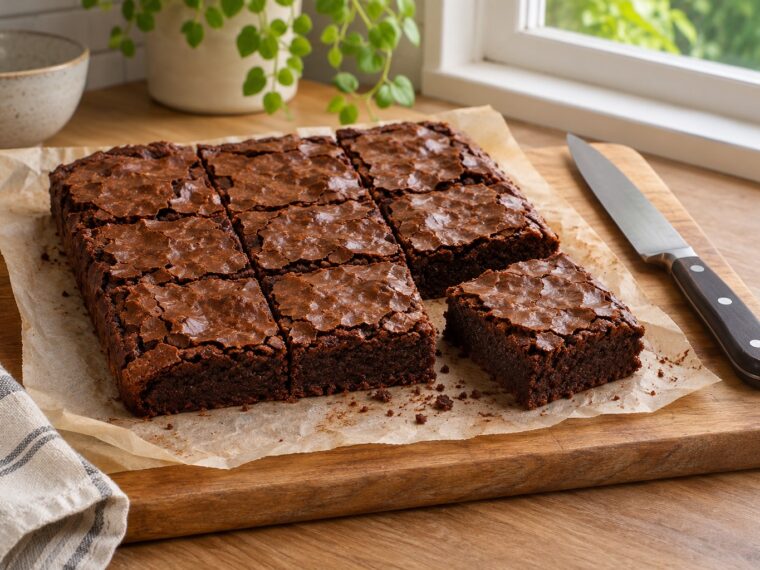
When to Cut Brownies for Neater Slices
A cool brownie slab is easier to lift and portion than a warm one. Learn the cues to…
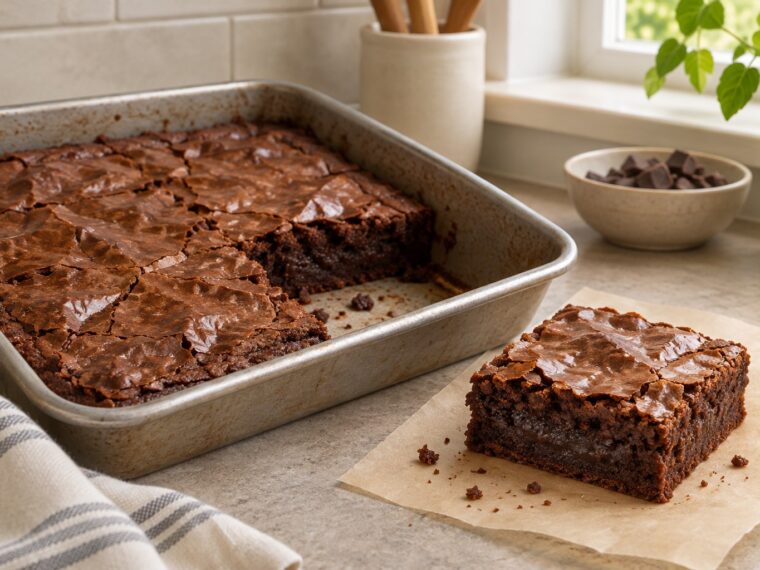
Why Brownies Turn Dry at the Edges Before the Center Sets
Dry edges and a soft middle can point to a mismatch between the batter, pan, and oven. Learn…
Fudgy Cocoa Brownies: A Recipe with Center and Edge Cues
These small-batch cocoa brownies use a loaf pan and a straightforward mixing method. Learn what set edges, a…