
Why Brownies Turn Dry at the Edges Before the Center Sets
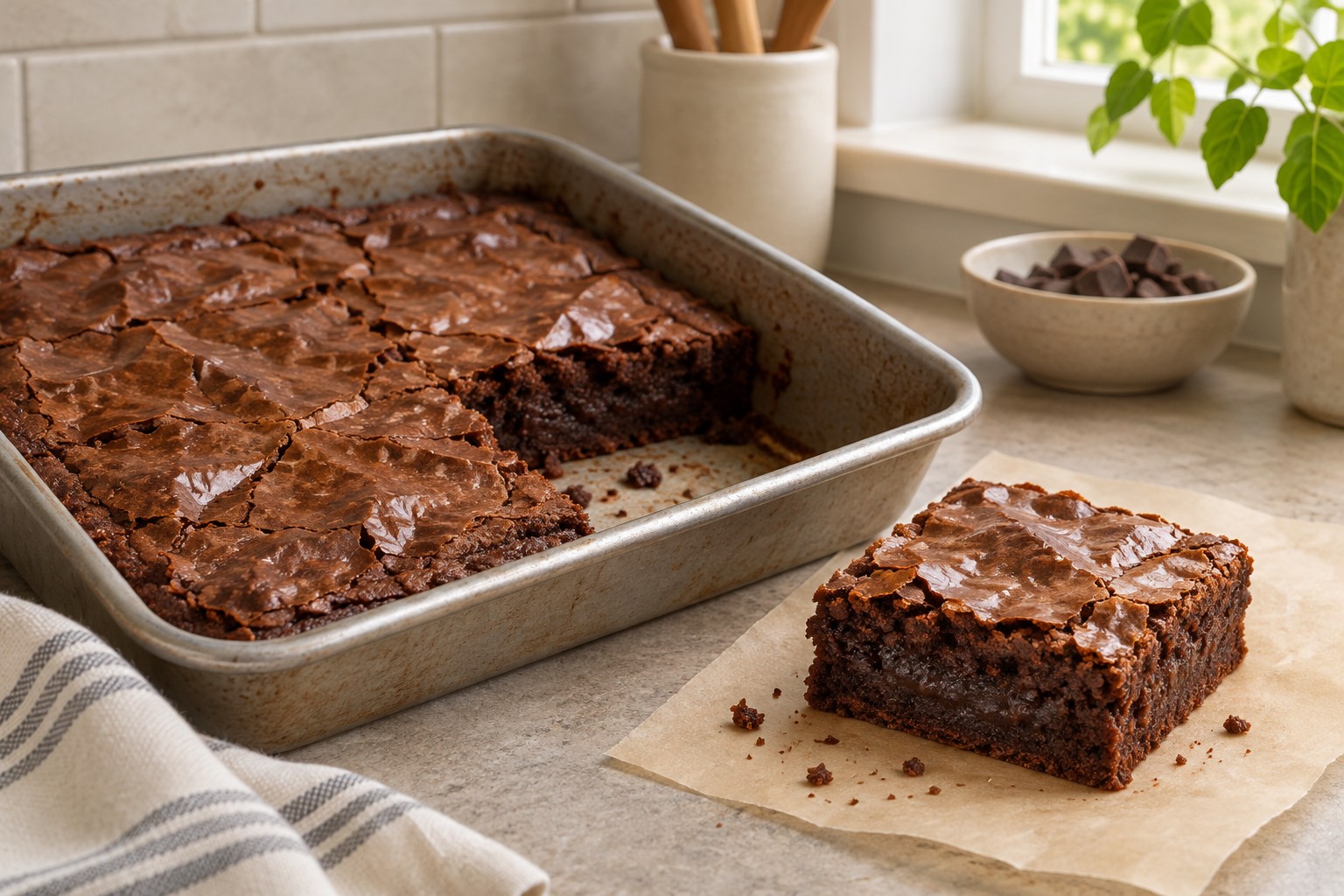
The edges look firm and dark, but a skewer dipped into the middle comes out coated in batter. Waiting for the center can leave the outer pieces dry; taking the pan out too soon can leave the middle unbaked.
A little difference between edge and center is normal. When the contrast is pronounced, start with the pan and oven setup before changing the ingredients. Batter depth, pan material, heat, and the point at which you begin checking can all influence how the batch develops.
First, read the center and the edges separately
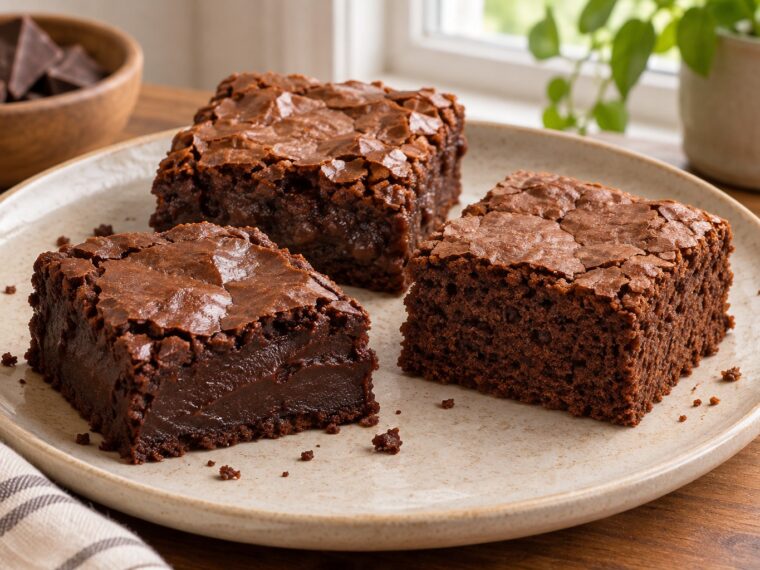
Look at the whole pan near the beginning of the recipe’s baking range. The edge may be set while the center still looks softer. That alone does not mean the batch has failed: the middle has had less direct contact with the hot pan.
Use the doneness cues for your particular recipe. If it calls for a skewer, insert one into the center. Some fudgy recipes look for moist crumbs without a coating of liquid batter; others specify a different endpoint. If you hit a chocolate chip, test another nearby spot. A shiny top or a clean edge does not tell you whether the center is ready.
If the recipe calls for a set center and you find liquid batter, continue baking and check again after a few minutes. Don’t remove a visibly unbaked center simply to protect the edges. These observations help you follow the recipe; they are not a standalone food-safety test. Cooling makes brownies easier to assess and cut, but it does not reliably cook an unbaked center.
For a broader look at the intended bite of different formulas, see Brownie Texture Explained: Fudgy, Chewy, and Cakey. A dense, soft brownie and one with a layer of liquid batter are different results.
Check batter depth against the recipe’s pan
Measure the inside of your pan, excluding the rim, and compare it with the dimensions in the recipe. The same amount of batter will sit deeper in a smaller pan and shallower in a larger one. A deeper middle can take longer to reach its intended endpoint while the edges remain exposed to heat.
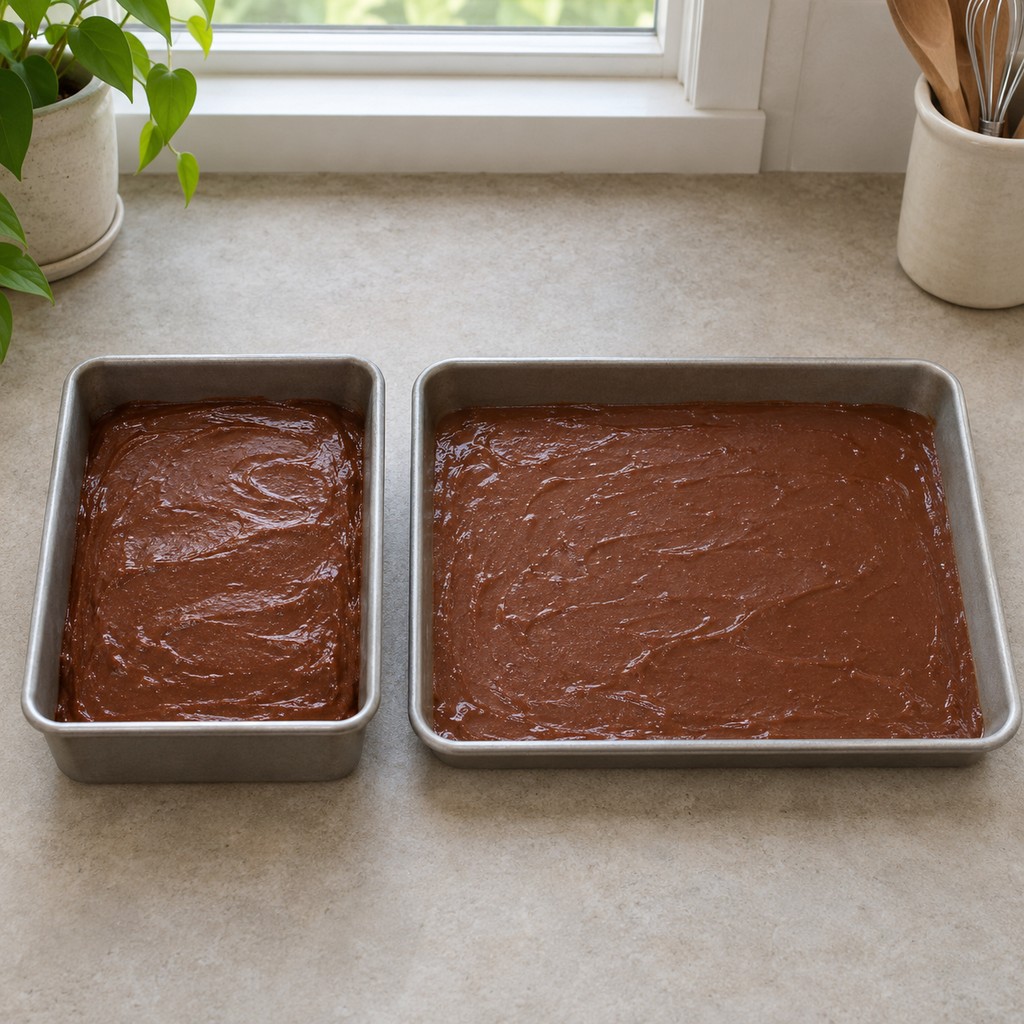
For example, moving a batch intended for a square pan into a noticeably narrower pan may give you taller brownies, but the original baking time is no longer a reliable endpoint. King Arthur Baking’s pan-size guide explains why a smaller pan can make a bake take longer. Pan depth and capacity matter too: never fill a pan so high that the batter may overflow as it rises.
A larger pan is not an automatic fix. Its thinner layer may bake sooner and become dry throughout if you wait for the original timer. Use the specified pan where possible; when you must change it, choose a recipe that provides an appropriate alternative and its own baking guidance. Spread the batter evenly into the corners so one area does not start out substantially thicker than another.
Notice the pan material and color
A pan can match the recipe’s dimensions and still behave differently from the one the recipe expects. Dark metal can produce darker edges than lighter metal, while glass heats differently and may leave the edges overbaked by the time the center is ready. These are tendencies, not a diagnosis for every pan or recipe. King Arthur Baking’s pan-material comparison illustrates how the same brownie batter can behave differently in different vessels.
If you used a dark or glass pan in place of the specified metal pan, record that detail. For your next attempt, returning to the recipe’s recommended material is a clearer starting point than changing the oven temperature, pan, and ingredients together. Follow any pan-specific temperature guidance provided by the recipe or equipment maker; there is no single adjustment that makes every substitute pan equivalent.
Check heat and timing together
Preheat fully and use the oven mode and rack position stated in the recipe. An oven’s displayed setting may differ from the temperature inside, and some areas can heat more strongly than others. If one side repeatedly darkens much faster, note which side faced the hotter area and whether the pan was close to an oven wall or heating element.
An oven thermometer can help you investigate a recurring temperature difference. Use it according to its instructions, allow the oven to preheat, and observe more than one reading rather than assuming a single glance describes the whole bake. Keep the recipe’s setup in mind before making an adjustment.
Start checking at the early end of the stated baking range, or at the recipe’s specified first check. Then use short intervals if the center needs more time. Waiting for a completely clean skewer when a particular fudgy recipe calls for moist crumbs can leave the brownies baking after their intended endpoint. Conversely, stopping because the timer has rung is not enough if the recipe’s center cue has not been met.
What to do with this batch
If the center is still liquid, continue baking and check it again as the recipe directs. If the edges are already very dark, a loose piece of foil over the top may limit further surface browning, but it cannot undo dry edges or guarantee even baking. Keep the foil clear of heating elements and follow your oven’s instructions.
Once the recipe’s endpoint is reached, cool the brownies as directed. Compare an edge piece and a center piece after cooling: a firmer edge is expected in many recipes, while a thick, hard rim alongside a noticeably underdone middle is a more useful troubleshooting clue. If the cooled center remains visibly unbaked, do not treat its softness as the desired fudgy texture.
Make the next batch easier to diagnose
Write down the recipe, pan’s inside dimensions and material, oven setting and mode, rack position, first check, final bake time, and what the skewer showed. Also note any ingredient substitutions or measurement changes. Too much flour or a changed formula can contribute to a drier result, but adding extra butter or liquid by guesswork makes it harder to identify the original problem.
Choose the clearest mismatch first. If the pan was smaller than specified, use the recommended size next time. If the correct pan was used but the edges darkened unusually fast, investigate oven heat and pan material. Keep the other conditions as consistent as practical, and compare the cooled result with your notes.
For a complete formula with a specified metal loaf pan and center cues, try Fudgy Cocoa Brownies: A Recipe with Center and Edge Cues.
Bake & panduan terkait
When to Cut Brownies for Neater Slices
A cool brownie slab is easier to lift and portion than a warm one. Learn the cues to…
Fudgy Cocoa Brownies: A Recipe with Center and Edge Cues
These small-batch cocoa brownies use a loaf pan and a straightforward mixing method. Learn what set edges, a…
Brownie Texture Explained: Fudgy, Chewy, and Cakey
A fudgy brownie and a cakey brownie can contain many of the same ingredients. Learn how their proportions…