
Simple Buttercream: Butter Temperature, Sugar, and Spreadability
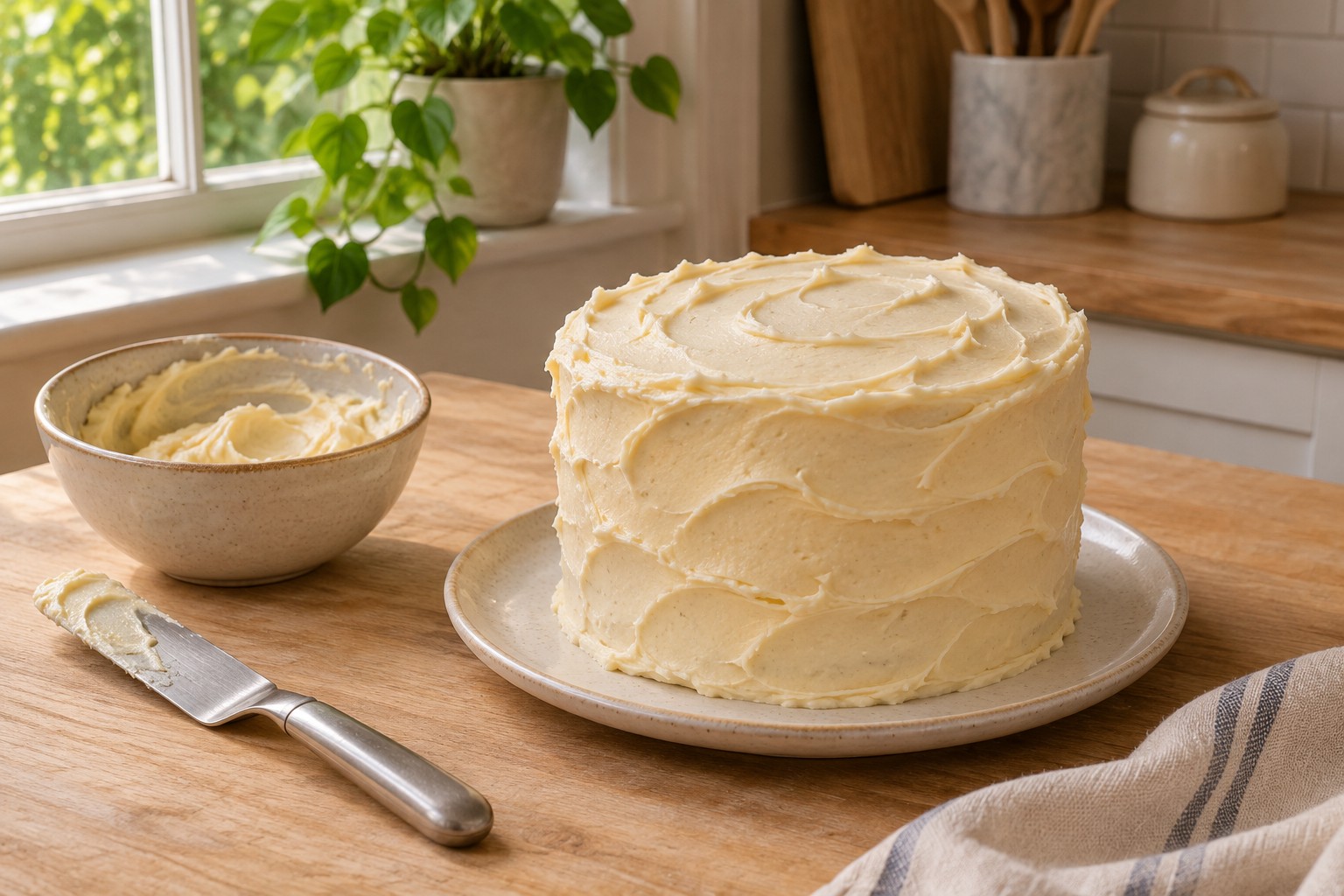
A spoonful of buttercream can look smooth in the bowl yet pull crumbs from a cake when you try to spread it. Another batch may glide easily but let a piped swirl slump. The difference is often easier to understand when you look at the butter, sugar, and working temperature together.
Simple buttercream is an uncooked frosting made by beating butter with icing sugar, often with a little vanilla and milk or cream. It is also called American-style buttercream. This guide focuses on how to recognize and adjust its texture; for ingredient quantities, use a complete recipe written for the finish you want, such as Vanilla Buttercream for Cupcakes: A Recipe with Softness Cues.
Choose the finish before you mix
A buttercream for a casual swoosh does not need to behave exactly like one for a defined piped border. Decide how you will use it before making adjustments.
For spreading, look for a frosting that moves under a spatula without requiring much pressure. A small ridge should remain when you lift the spatula, but the frosting should not feel so firm that it tears the cake surface.
For piping, the buttercream needs to pass through the nozzle while retaining the shape you make. Test a small swirl on a plate: if the edges soften immediately, the mixture may be too warm or too loose for that detail. If squeezing the bag is difficult and the ridges break rather than flow, it may be too firm.
For filling a layer cake, consider the cake as well as the frosting. A very soft filling can squeeze outward under the weight of another layer, while a very firm one can be difficult to spread on a delicate crumb. A small, even layer on a completely cooled cake is easier to judge than a thick layer added all at once.
These are working cues, not guarantees that a cake will hold a particular design during transport or in heat. The recipe, the size of the decoration, and the conditions around the finished cake all matter.
Start with butter that yields, not butter that melts
Press the butter gently with a clean fingertip. It should give enough to leave an indentation while the piece still holds its shape. Hard butter resists the beaters; butter that is shiny, slumping, or surrounded by melted liquid has gone beyond the soft starting point most simple buttercreams need.
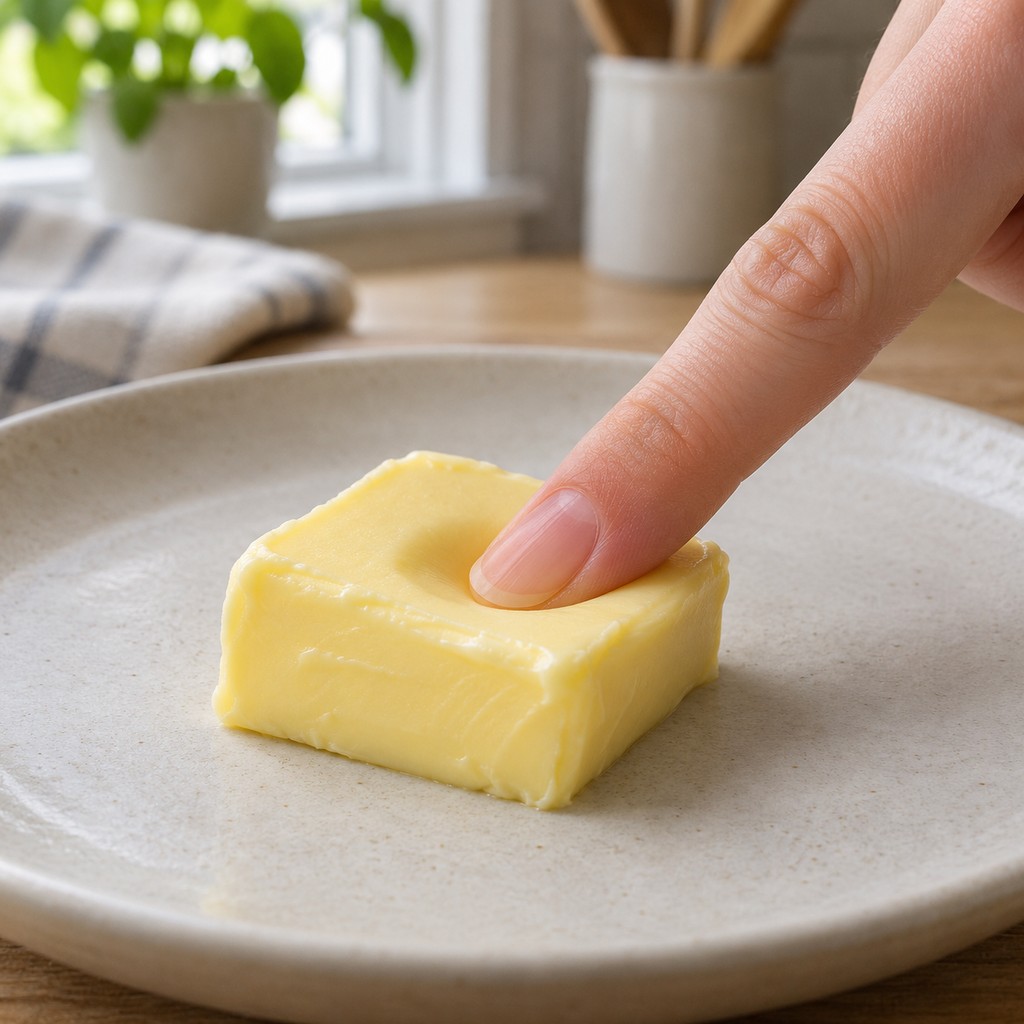
In a warm kitchen, check the butter itself rather than relying on a fixed time on the counter. Cut it into smaller pieces if that helps it soften more evenly, and keep it away from a hot oven or sunny window. If it becomes oily or partly melted, chill it until it firms again, then let it reach a pliable, non-melted state before mixing.
Cold butter can leave small firm pieces in the bowl, while overly warm butter can make the finished frosting feel loose before any liquid is added. Butter temperature affects how a beaten mixture behaves; King Arthur Baking’s creaming guide illustrates the contrast between cold, softened, and overly warm butter. Its examples concern cake creaming, so use them as a guide to butter condition rather than as a mixing-time rule for frosting.
Unsalted butter lets you control the salt in a recipe. Salted butter can change the overall seasoning, so follow the recipe’s directions if you use it. Margarine, baking spreads, and shortening have different formulations; choose a recipe that specifies the ingredient instead of assuming an equal substitution will give the same texture.
What icing sugar and liquid contribute
Icing sugar, also called powdered or confectioners’ sugar, brings sweetness and body. Its fine texture suits an uncooked frosting more readily than ordinary granulated sugar. Products differ, so check the label and use the type your recipe specifies. King Arthur Baking’s sugar guide describes confectioners’ sugar and its use in frosting.
Weigh the sugar when the recipe gives a weight. If it calls for sifting, follow that instruction; breaking up lumps before they go into the bowl makes them easier to incorporate. For help with volume measurements, see how to measure sugar and other baking ingredients.
A small amount of milk or cream can loosen a stiff mixture, but it is easier to add than to take away. Start with the smaller quantity in your chosen recipe. Mix it in completely, scrape the bowl, and inspect the texture before adding more. A few drops or a small spoonful may be enough for a modest adjustment; the right amount depends on the batch.
More sugar can make a loose frosting firmer, but it also makes it sweeter and changes the balance of the recipe. Before reaching for the bag, ask whether the buttercream is simply warm. Cooling and reassessing may preserve the flavor you already like. The separate guide to buttercream that is too soft to pipe covers that decision in more detail.
Mix in stages and inspect the whole bowl
Have the ingredients measured, the cake fully cooled, and a flexible spatula ready. A hand mixer and a bowl large enough to contain the sugar are sufficient for many small batches. Follow the sequence and quantities in your recipe; a typical simple buttercream follows this pattern:
- Beat the softened butter until it looks smooth and lighter in texture. Stop the mixer and scrape the sides and bottom of the bowl.
- Add icing sugar in portions. Start the mixer slowly after each addition so the sugar stays in the bowl, then mix until incorporated.
- Add the recipe’s vanilla and the smaller suggested amount of milk or cream. Beat until the frosting looks cohesive, stopping to scrape as needed.
- Check a spoonful for texture. Make any permitted liquid adjustment gradually, mixing fully between additions.
- Finish by stirring slowly with the spatula to press out some larger visible air pockets, if a smoother surface is useful for your finish.
The finished mixture should be consistent from the center to the bottom of the bowl. A soft-looking patch around the beaters can hide firmer butter or dry sugar underneath. Scraping gives you a more reliable sample before you decide that the whole batch needs more liquid.
A little air makes frosting feel lighter, but large pockets can leave holes as you spread. Slow final stirring can help with those visible pockets; it will not make a warm, loose frosting suitable for intricate piping. For more on handling the surface, see How to Reduce Air Bubbles in Buttercream Before Frosting.
Test spreadability on a small area
A spatula test is more useful when it resembles the job ahead. Put a little frosting on a plate or a spare piece of cooled cake and spread it in a thin layer. Notice both how much pressure you need and what happens to the surface underneath.
If it drags and tears a delicate cake, first check whether it is unusually cold or whether firm bits remain. Let it soften only as needed, then stir and test again. If the recipe allows a liquid adjustment and the frosting is still stiff, add a very small amount, mix, and repeat the test. Avoid pouring in enough liquid to change the entire batch at once.
If it slides off the spatula or loses every ridge, check the temperature of the bowl and the buttercream. For a warm, soft batch, place the bowl in the refrigerator briefly, then stir and check the center as well as the edges. Repeat in short intervals if necessary. Chilling may help a warm mixture become workable, but it cannot remove excess liquid or guarantee that the frosting will stay firm in a hot room.
For a piping test, fill the bag with only a little buttercream at first. Pipe a few shapes onto a plate, pause, and watch whether they keep the definition you need. A broad swirl can be more forgiving than a fine, tall decoration. If you adjust the whole bowl, repeat the test before filling the bag completely.
Troubleshoot what you can see
| What you notice | What to check first | A measured next step |
|---|---|---|
| Small firm butter pieces | Was the butter cold? Did you scrape the bottom? | Allow the mixture to soften slightly, then scrape and mix again. |
| Visible sugar lumps | Was the sugar lumpy before mixing? | Break up remaining accessible lumps and mix; sift lumpy sugar before the next batch. |
| Stiff frosting that pulls at cake | Is it cold, or does the recipe permit more liquid? | Let it soften a little if cold; otherwise make a small recipe-permitted liquid adjustment. |
| Soft, shiny frosting | Is the bowl or kitchen warm? Was extra liquid added? | Cool briefly and reassess. If excess liquid is the cause, cooling alone may not solve it. |
| Pockets or holes in a spread surface | Was a lot of air incorporated during mixing? | Stir slowly with a spatula and spread a small test area. |
A grainy or uneven appearance can have more than one cause. Avoid adding liquid, sugar, and heat in succession before checking the starting conditions; changing several things at once makes the result harder to understand. If the frosting remains unsuitable, use it only where its texture works and make a note for the next batch.
Work with the temperature of the whole cake
Buttercream softens as it warms and firms when chilled. In a warm kitchen, work away from direct sun and oven heat, prepare the cake and tools before mixing, and keep decorations simple if the frosting is becoming difficult to handle. A cool room can give you more working time, but no single piping test promises that a finished cake will withstand transport or outdoor display.
Cool the cake completely before frosting: warmth from the cake can soften even a well-mixed buttercream. If you need a different finish, chocolate ganache basics explains how chocolate, cream, and temperature affect a separate type of frosting and filling. Ganache is not a direct substitution in the same buttercream formula.
Store with the ingredients and filling in mind
Use clean utensils and cover prepared frosting. Refrigerate buttercream made with milk or cream and any assembled cake containing perishable fillings; do not assume sugar makes every homemade frosting shelf-stable. Follow the storage instructions for the complete recipe and its most perishable component. FoodSafety.gov’s food-safety guidance recommends refrigerating perishable foods promptly and keeping the refrigerator at 4°C or below.
Chilled buttercream may be too firm to spread straight from the refrigerator. When you are ready to use it, let it soften only as needed, then stir or briefly remix and test a small amount. Keep the time perishable ingredients spend out of refrigeration within applicable food-safety guidance. Check dairy labels and any other ingredients for allergens, and use appropriate care to prevent cross-contact.
The useful endpoint is the texture that suits your cake today: soft enough to move where you want it, firm enough to stay there, and adjusted with the kitchen’s temperature in mind.
Bake & panduan terkait
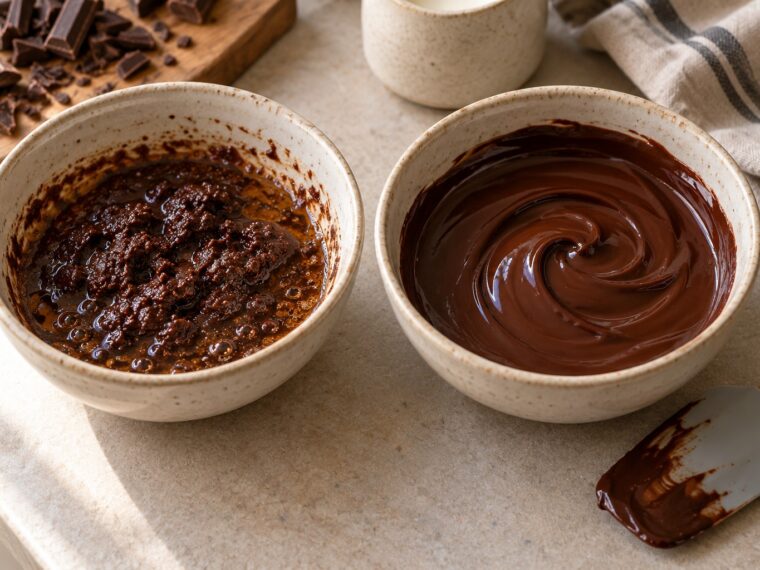
Why Chocolate Ganache Splits and How to Approach a Repair
Oily pools and a rough chocolate mixture call for a different response from smooth ganache that has simply…
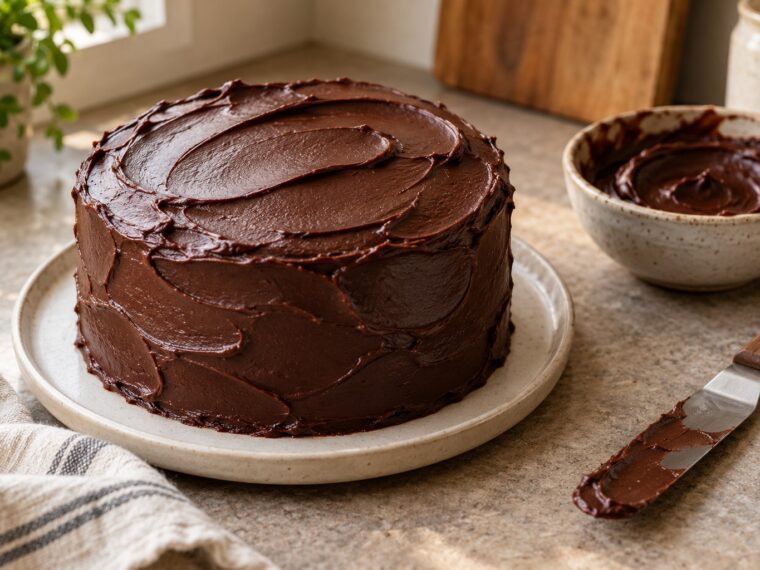
Dark Chocolate Ganache for Spreading: A Recipe with Consistency Cues
A smooth ganache needs time to become spreadable. Follow this dark chocolate recipe, then watch for soft folds…
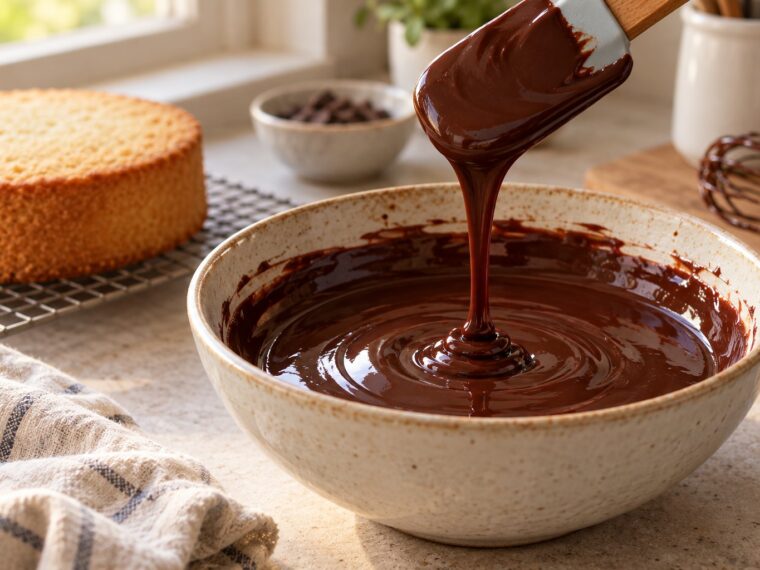
Chocolate Ganache Basics: Ratios, Temperature, and Texture
Ganache changes as it cools. Learn how chocolate choice, cream proportions, and temperature work together, with practical cues…