
Why Bread Roll Dough Stays Sticky and When to Add Flour
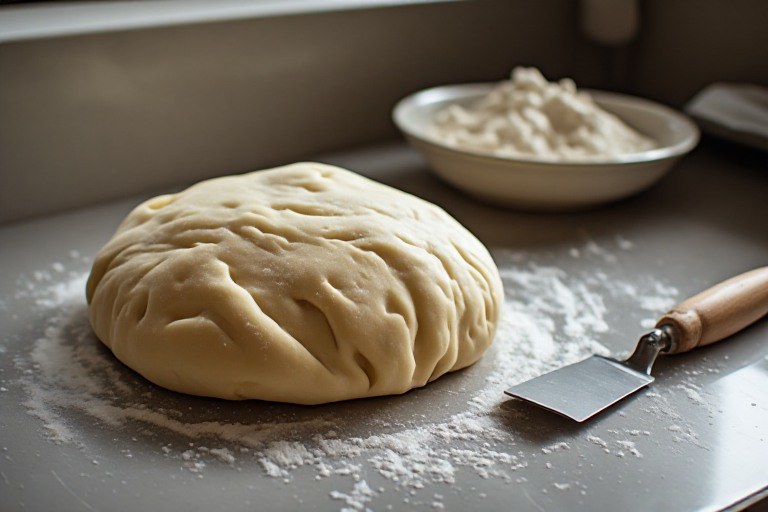
A little dough clings to your fingers, so you dust the counter. A few folds later, it sticks again. Another handful of flour feels tempting—but the dough may still be developing, or it may already have the softness the recipe intended.
Sticky bread roll dough does not automatically need more flour. First check when the sticking happens, whether the dough is becoming more cohesive, and whether its ingredients and temperature match the recipe. Add flour when there is a clear reason, rather than trying to make every surface completely dry.
Start with the dough the recipe describes
A soft dinner-roll dough and a rich, buttery bun dough will not necessarily feel alike. Read the recipe’s texture description and mixing sequence before deciding that yours is too wet. This guide concerns ordinary kneaded wheat roll dough; gluten-free dough and deliberately very wet formulas need their own handling instructions.
For the surrounding process, the site’s soft yeast roll basics guide connects mixing, dough development, proofing, and baking. Here, the question is narrower: what should you investigate before changing the flour quantity?
Notice the stage, too. A rough mixture immediately after combining the ingredients is a different starting point from dough that has completed kneading or already risen. Compare your batch with the recipe at the same stage.
Read the sticking alongside the structure
For practical troubleshooting, tacky describes dough that briefly grips a clean, dry fingertip but releases fairly readily. More troublesome sticking leaves a substantial coating or makes the whole mass difficult to gather. These are handling descriptions, not precise tests, and pressing harder or holding your finger against the dough longer changes the impression.
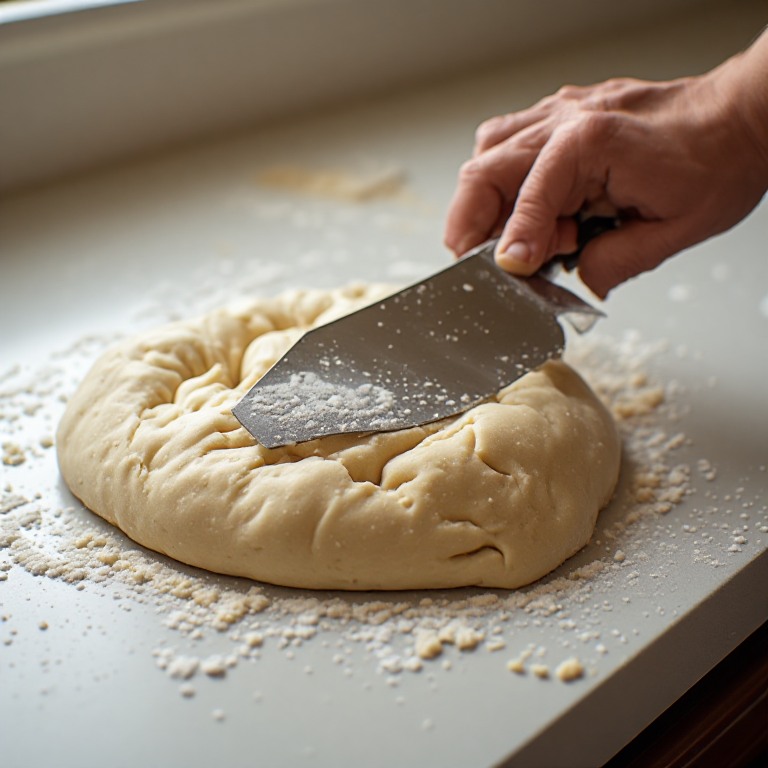
Look beyond your fingertip. Does the dough gather when lifted with a scraper? Can you fold it over itself? Is it becoming smoother and stretching more readily as you work? A soft mass that holds together may be progressing even while its surface still clings.
Use this comparison to choose what to check next:
| What you notice | What to investigate first |
|---|---|
| Rough dough that tears early in mixing | Whether mixing and kneading are complete |
| Soft dough that gathers and stretches but lightly grips fingers | Whether this matches the recipe’s intended texture |
| Dough that becomes warmer and increasingly difficult to handle | Ingredient temperature, room conditions, and mixing heat |
| A much looser mixture than the recipe describes | Measurements, omitted ingredients, or substitutions |
| Developed dough that sticks mainly during shaping | Surface preparation and handling before changing the whole batch |
No single observation identifies the cause. A sticky patch on the counter, for example, tells you less than how the dough behaves when you gather and fold the entire mass.
Check the measurements before changing them
Set the ingredient list beside your notes or the packages you used. Confirm that the full flour quantity went in, the scale was set to grams if required, and the bowl was tared correctly. Check liquid measurements separately from flour measurements.
Include easy-to-miss additions: water used to prepare yeast should come from the recipe’s total unless directed otherwise. Check the specified egg size or shell-free weight, and whether milk powder was confused with liquid milk. A known missing quantity calls for correcting that omission; an uncertain measurement needs more caution.
Record substitutions as changes to the formula. Different flour, liquid sweeteners, or butter replacements can alter how a dough behaves. For flour sold in Indonesia, use the recipe description and the manufacturer’s intended use rather than choosing by package color alone. A flour substitution is a reason to reconsider expectations, not proof that a particular extra quantity will fix the batch.
Avoid compensating for an uncertain mistake with repeated handfuls. If you cannot reconstruct what went into the bowl, a carefully measured new batch may teach you more than a substantial, unrecorded reformulation.
See other article: Mengapa Roti Mengeras di Kulkas? Memahami Perubahan Pati setelah Dipanggang.
Give development a chance
During kneading, assess whether the dough becomes more cohesive and elastic. Use a dough scraper to lift and fold sticking dough back into the mass instead of repeatedly coating it with flour. Follow the recipe’s method; a wet dough designed for folds should not be forced through a different kneading routine simply to make it feel firmer.
King Arthur Baking’s guidance on high-hydration dough explains why wetter formulas require different expectations and strengthening methods. That context does not mean ordinary roll dough should be treated as high-hydration sourdough; it shows why stickiness alone cannot determine the correct technique.
If the dough repeatedly resists stretching, cover it for a brief rest before assessing it again. Keep any rest compatible with the recipe’s sequence. Do not assume that every enriched dough needs a separate flour-and-water rest, especially when the method specifies staged additions.
With a mixer, stop the machine before touching or scraping the dough. Follow its capacity and operating instructions. Dough climbing the hook or leaving the bowl sides is not, by itself, a reason to stop assessing its texture—or to keep the machine running indefinitely.
Notice when warmth enters the picture
Did the dough start manageable and become progressively warmer during mixing? Is the bowl beside a preheating oven? Those details deserve attention before you add flour. King Arthur Baking’s dough-temperature explanation identifies room temperature, ingredient temperatures, and mixing friction as contributors to the dough’s final temperature.
In a warm kitchen, move away from concentrated heat and pause to assess the dough rather than automatically extending mixing. If the recipe allows a short covered chill for handling, follow that instruction. Chilling can change how the dough feels, but it does not establish that the measurements or development were correct.
For the next batch, record whether the ingredients and bowl began warm. Cooler mixing liquid may help when compatible with the recipe and yeast preparation instructions; do not change a required yeast-rehydration step casually. Keep the recipe’s intended dough condition as your reference rather than applying one temperature rule to every roll formula.
When a little more flour makes sense
A flour adjustment is reasonable when you have identified an omitted amount, when the recipe explicitly directs you to adjust within a flour range, or when the dough remains clearly looser than its intended texture after checking measurements, development, and warmth.
For an ordinary roll-sized batch, try a small measured addition, such as a teaspoon, rather than a handful. Incorporate it fully before deciding whether another is needed, and record the cumulative amount. This is a cautious handling approach, not a universal correction quantity: batch size and the original formula matter.
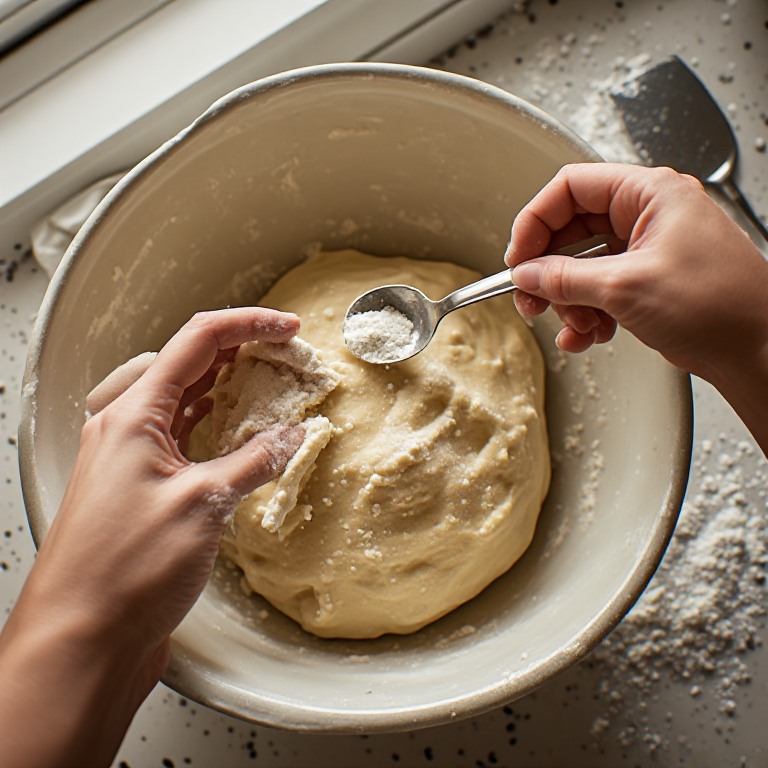
Stop when the dough reaches the recipe’s intended soft, workable consistency. Do not continue until every trace of tackiness disappears. King Arthur Baking’s sticky-bun method provides a useful example of dough that should remain slightly tacky and warns that excess flour can produce dry, heavy results. Its adjustment quantities belong to that particular recipe.
If small additions are turning into a substantial change, pause. Revisit the formula instead of treating the next spoonful as the solution. Adding flour changes the proportions of the dough, so it is more than a temporary way to clean your hands.
Keep shaping flour separate from a formula correction
Dough can be properly developed and still need help releasing from the work surface. Follow the recipe’s instruction for a lightly floured or lightly oiled surface. Use a scraper to lift portions, and keep waiting pieces covered while you work.
Apply only enough surface flour to handle the dough. Avoid rolling each portion through a thick coating, especially where edges must join underneath. If you need more dusting repeatedly, note that pattern rather than silently working a large amount into the batch.
For a complete formula with its own kneading and proofing cues, use Soft Milk Bread Rolls: A Recipe with Kneading and Proofing Cues. Follow its quantities and texture instructions together rather than borrowing an adjustment from an unrelated dough.
The most useful note for next time is specific: “soft and cohesive after kneading, needed a light dusting during shaping” or “became warmer and looser during extended mixing.” That gives you a starting point for the next batch—and a better reason for an adjustment than sticky fingers alone.
Bake & panduan terkait
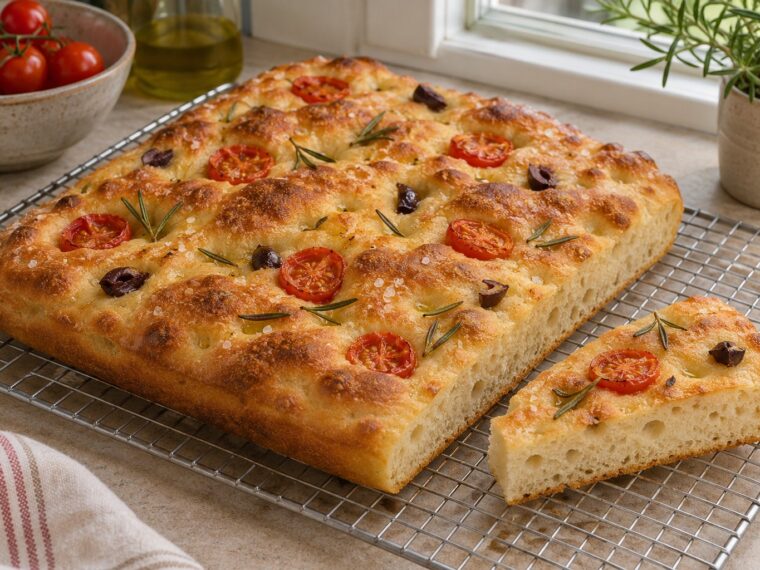
Choosing Focaccia Toppings Without Weighing Down the Dough
A well-topped focaccia still leaves room for the bread. Prepare wet ingredients, keep pieces manageable, and spread flavor…
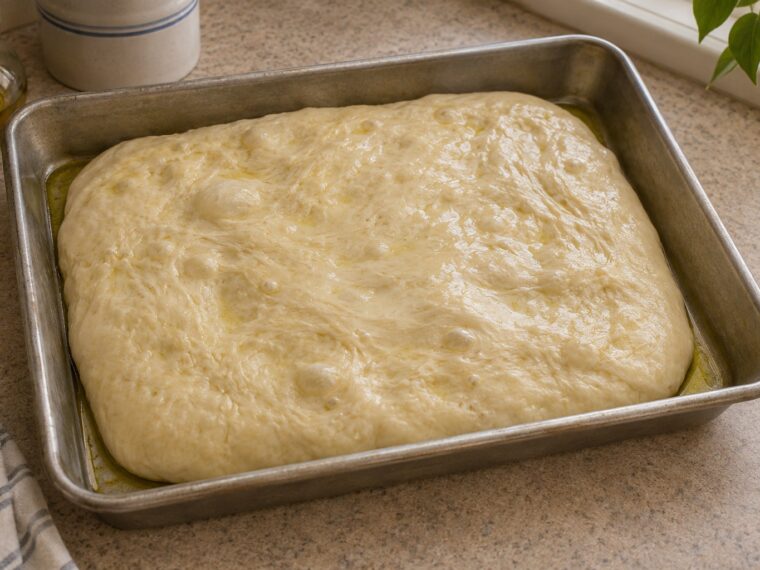
Focaccia Dough Springs Back in the Pan: Resting and Stretching Checks
When focaccia pulls back from the pan’s corners, more force rarely helps. Use a covered rest, gentle handling,…
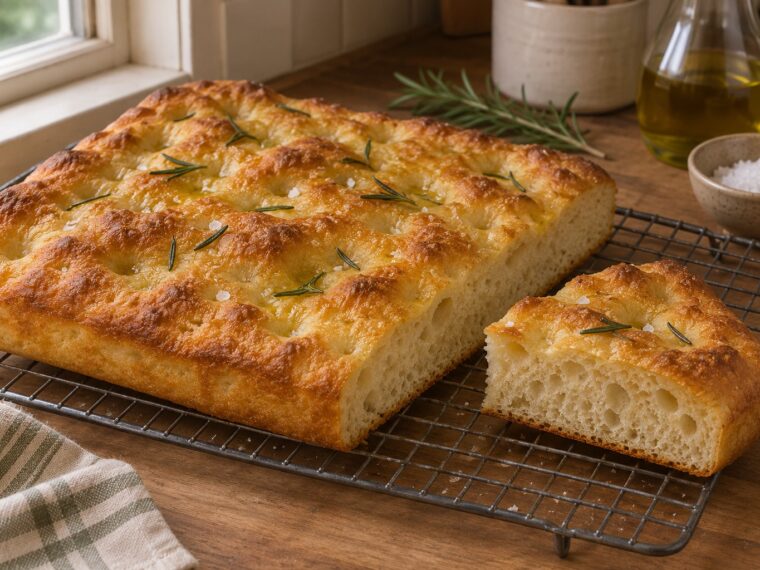
Same-Day Focaccia: A Recipe with Fold and Proofing Cues
A bowl-and-pan focaccia recipe with a simple olive oil topping. Follow the dough’s stretch, expansion, and wobble alongside…