
Why Drop Cookies Spread Too Much and What to Adjust Next Time
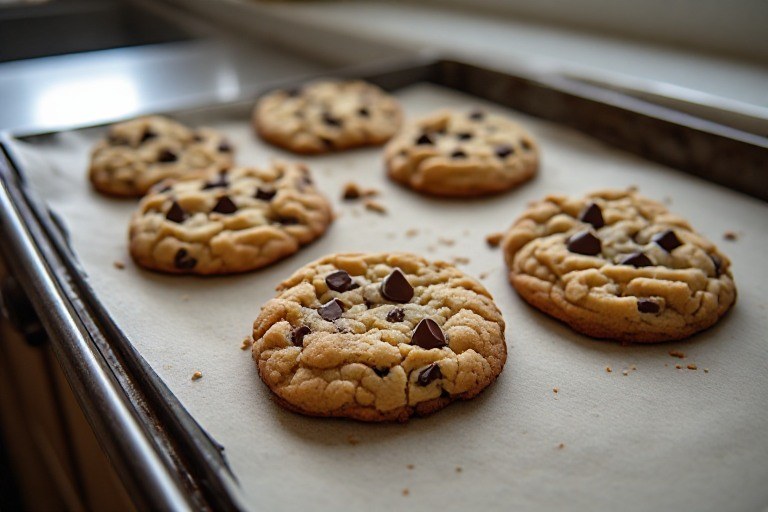
The first tray comes out wider than expected, with thin edges and barely any middle. Before stirring more flour into the remaining dough, pause: did the scoops already slump on the tray, or did they hold their shape until baking? Did every tray behave this way, or only the later ones?
Those observations help explain why drop cookies spread too much without changing several things at once. Start with the recipe’s intended result, then investigate the first point where your batch behaved differently.
Start with the pattern in the batch
A thin cookie is only a problem when the recipe promises something thicker. Compare your cookies with its stated portion size, shaping instructions, and finished texture. The broader drop cookie basics guide explains how dough texture, spread, and doneness fit together; here, the aim is to narrow down excessive spread.
Write down what happened while it is still easy to remember. “Later scoops flattened before baking” gives you more to work with than “the dough was wrong.”
| What you notice | What to investigate first | A focused next step |
|---|---|---|
| Dough becomes progressively softer while portioning | Warming during handling | Restore the recipe’s intended dough condition before the next tray |
| First tray looks right, later trays spread more | Dough warming or reused hot sheets | Compare how each tray was prepared |
| Every tray spreads too far | Measurements, substitutions, chilling, and oven setup | Check your ingredient record before altering the formula |
| Cookies merge but individual rounds otherwise look right | Portion size and spacing | Return to the recipe’s scoop size and spacing |
| Spread comes with uneven browning | Rack position and oven behavior | Record where the darkest cookies sit |
These patterns suggest questions rather than prove a cause. If both the dough and the baking sheet became warmer between trays, a better second attempt will need a more consistent starting routine.
Separate warm dough from an incorrect formula
Check what “softened butter” meant
For a recipe that creams butter and sugar, softened butter should be pliable while still holding its shape. Butter that looks oily, partly melted, or almost pourable has moved beyond that condition. King Arthur Baking’s cookie-spread guidance identifies overly warm butter as one possible contributor.
In a warm kitchen, judge the butter itself rather than leaving it out for a fixed time. On the next batch, have the other ingredients ready before softening it, and keep the mixing bowl away from the hot oven.
A melted-butter recipe is a different starting point. Follow its cooling and resting instructions instead of replacing melted butter with softened butter simply because another recipe uses it.
Use chilling for the problem it can address
Chilling firms fat in many butter-based doughs and can reduce spread. King Arthur Baking’s chilled-dough comparison demonstrates that effect, but its results do not establish one chilling time for every formula.
First complete any rest or chill the recipe requires. Then compare the dough with its description: does a scoop hold a rounded mound, or immediately relax into a puddle? Sticky dough can still hold its shape; sticking to a spoon alone is not a reason to add flour.
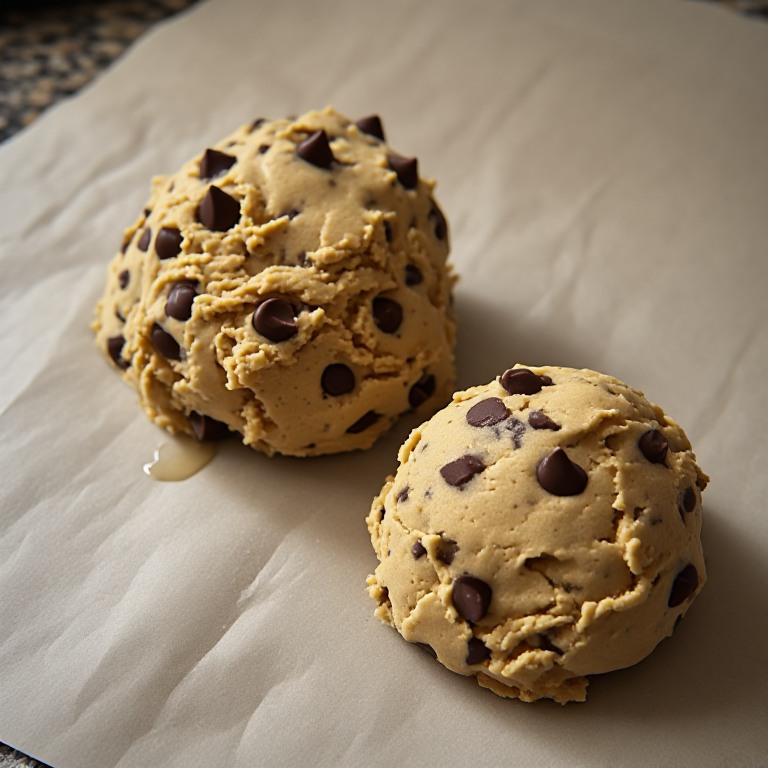
If the remaining dough has warmed noticeably, cover and refrigerate it to restore the intended handling consistency before baking a small trial tray. Keep portion size, liner, and oven setting unchanged so the comparison remains useful.
Chilling does not establish that the measurements were correct. If you suspect a missing ingredient or an accidental extra addition, check that possibility separately rather than extending refrigeration repeatedly.
Check measurements before adding flour
Set your ingredient notes beside the original recipe. Confirm the flour, sugar, fat, and egg quantities, including whether the recipe specifies an egg size or a weight without the shell. Extra liquid or sugar can contribute to spread; using a larger egg than specified is one way the proportions can change.
For the next batch, use the recipe’s gram weights where provided. If it gives only cups, follow its stated measuring method rather than switching between different conversion charts. Check that the scale uses the intended unit and that you reset it after placing the bowl on it.
Also record substitutions plainly. Butter replaced with margarine, a different flour, or a liquid sweetener means you are investigating a changed formula. Return to the specified ingredients where practical before deciding the original recipe needs correction.
Avoid adding flour until the dough merely feels less sticky. That creates a new formula without a clear reference point. If you discover that you omitted a known quantity, the issue is different from guessing how much extra flour might stop spreading. When the missing amount is uncertain, a carefully measured new batch will tell you more than repeated spoonfuls added to the bowl.
For a concrete reference, the site’s chocolate chip drop cookie recipe specifies ingredient weights, rounded portions, and a chill until the dough holds a scoopable mound. Use those cues with that recipe rather than applying its quantities to another dough.
Give each tray the same starting conditions
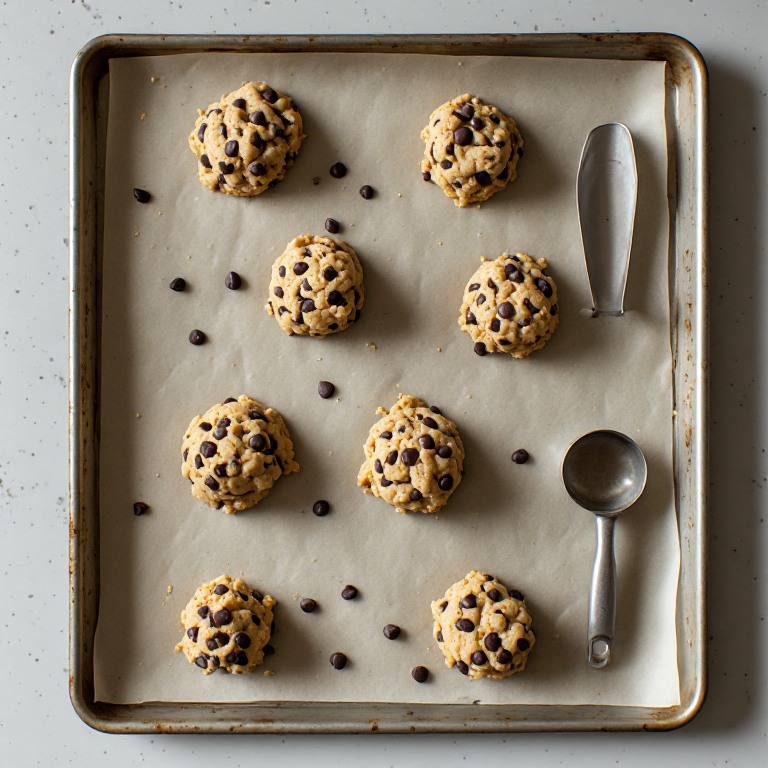
A hot baking sheet can warm fresh scoops before they reach the oven. Let sheets cool between batches, and keep waiting dough away from oven heat. This is especially worth investigating when the first tray behaves well and later ones flatten more.
Check the surface too. If the recipe calls for an ungreased parchment-lined sheet, adding butter or spray introduces another variable. Parchment, foil, and silicone mats are not automatically interchangeable: King Arthur Baking’s pan-lining comparison produced different spread and texture outcomes using the same dough.
Return to the recipe’s specified preparation before buying a different liner. The comparison supports treating the surface as a meaningful variable; it does not mean one lining will produce the best result for every cookie.
Keep the portions consistent as well. Use the same scoop or stated dough weight, leave the specified space, and avoid flattening only some of the mounds. More space can keep otherwise suitable cookies from touching, but it does not correct dough that spreads much farther than intended.
Check oven behavior before changing the temperature
Confirm the recipe’s temperature, oven mode, and rack position. A conventional setting and a fan setting are different instructions; use your appliance’s guidance when a conversion is needed.
Resist the automatic advice to turn the oven up or down. King Arthur Baking’s temperature experiment found that a lower setting helped one particular dough, while its broader troubleshooting guidance also identifies an insufficiently heated oven as a possible cause of spreading. A flat cookie alone does not tell you which direction to change the dial.
Start by establishing whether the oven reaches the recipe’s intended temperature. An oven thermometer used according to its instructions can help investigate a mismatch. If browning is uneven, note the location of the darker cookies and the rack used. Keep that observation separate from whether the whole batch is too wide.
Do not shorten baking simply to interrupt spreading. Follow the recipe’s baking and doneness instructions; investigate the starting conditions on the next tray.
Choose one adjustment you can learn from
For the remaining dough, begin with an observable handling issue: restore warmed dough to its intended consistency, use a cooled sheet, or return to the specified liner. Bake a small representative tray before committing the rest. If several starting conditions were wrong, correct them, but record that you changed more than one variable.
For the next full batch, keep a brief note of the ingredient weights, butter condition, chilling endpoint, portion size, tray preparation, oven mode, and cooled result. You do not need an elaborate baking log. A sentence such as “first tray held its shape; later dough softened beside the oven” can point directly to a useful change.
Let a cookie cool as directed before judging its finished texture. The next attempt should answer a specific question: did controlling dough warmth, correcting a measurement, or making the tray routine consistent bring the result closer to the recipe? That gives you a clear place to begin the following batch.
Bake & panduan terkait
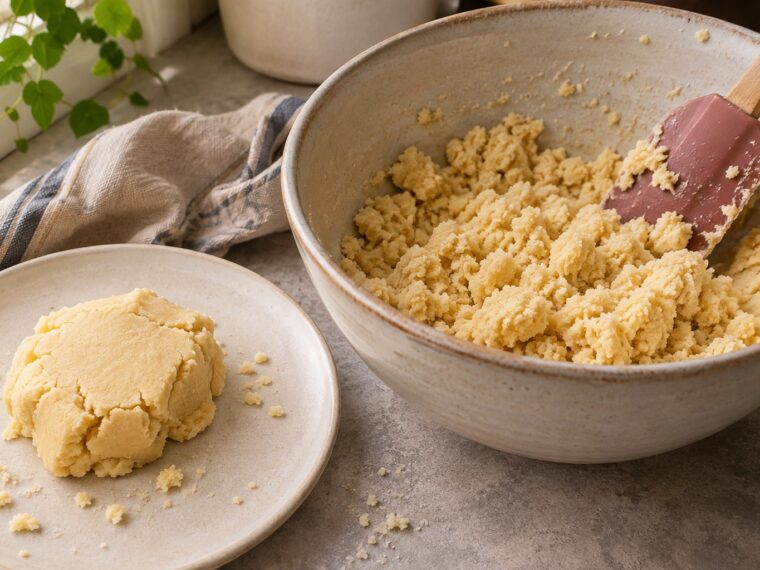
Shortbread Dough Won’t Hold Together: What to Check Before Adding Liquid
Crumbs in the bowl do not always mean shortbread dough is too dry. Check whether they join under…
How to Cut and Move Shortbread Without Breaking It
Cutting and lifting are separate stages. Follow the scored lines while a shortbread slab is still warm, then…
Vanilla Shortbread Fingers: A Press-in-Pan Recipe
Press buttery vanilla dough into one pan, dock the surface, and cut it while warm. Follow the texture…